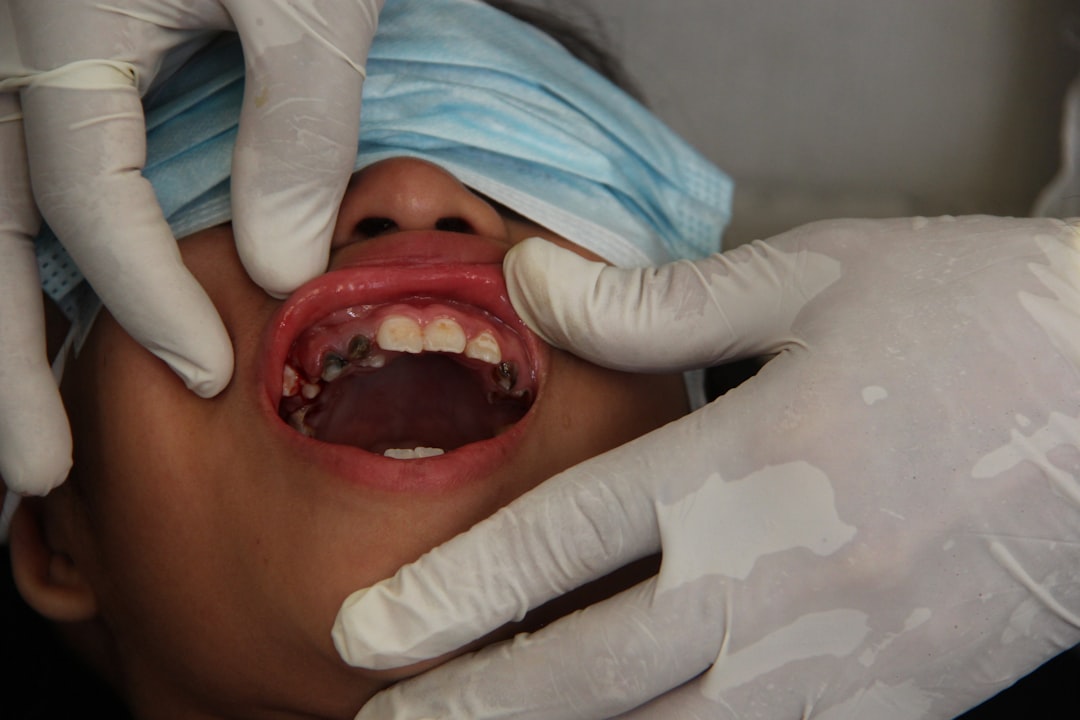
A patient came into my Huntington Beach office last year after months of frustration. She’d been experiencing sharp pain in her upper right molar every time she bit down on something hard, but it came and went. One day it hurt, the next day it didn’t. She’d been to two other dentists already. One had told her nothing was wrong because her X-ray looked fine. The other had told her it was probably just sensitivity and to use Sensodyne. She was losing her mind because she knew something was wrong, and nobody was taking her seriously.
I had her bite down on a small wooden stick called a Tooth Slooth, isolating each cusp of the tooth one at a time. On the disto-buccal cusp — the back outer corner of the molar — she jumped out of the chair. That was the crack. I placed a crown on the tooth two weeks later, and she hasn’t had a single twinge of pain since.
Cracked tooth syndrome is one of the most frustrating diagnoses in dentistry, both for patients and dentists. The classic symptoms are specific and recognizable, but the cracks themselves are often invisible on X-rays, and the pain is inconsistent enough that it can be dismissed as sensitivity or psychosomatic. After 20+ years of practice, I’ve learned to recognize cracked tooth syndrome quickly — and I’ve also learned how often patients bounce between providers before someone takes the time to diagnose it properly. Let me walk you through what it is, how it’s diagnosed, and why early intervention matters so much.
What Cracked Tooth Syndrome Actually Is
A cracked tooth is exactly what it sounds like — a fracture line running through the tooth structure. But the specific condition called “cracked tooth syndrome” refers to a particular presentation: an incomplete crack that’s large enough to cause symptoms but small enough that the tooth hasn’t broken into separate pieces yet.
There are several types of dental cracks, and the treatment depends on which type:
Craze lines. Tiny, superficial cracks in the enamel only. Usually cosmetic, almost never painful, don’t require treatment. Most adult teeth have some craze lines after decades of normal use.
Fractured cusp. A piece of the tooth breaks off, usually around a large filling. The patient typically knows exactly what happened — they were chewing and something gave way. These are usually obvious and straightforward to treat with a new filling or crown.
Cracked tooth (the syndrome). This is the tricky one. An incomplete crack extends from the biting surface of the tooth toward the root, but hasn’t fully separated the tooth into pieces. The crack opens slightly when you bite and closes when you release — which is exactly why the classic pain is “sharp pain on release” rather than “sharp pain when biting down.”
Split tooth. A crack that has progressed through the tooth and caused it to separate into distinct pieces. These teeth usually can’t be saved.
Vertical root fracture. A crack that starts in the root and extends upward. Almost always requires extraction because the crack has compromised the root structure.
The “cracked tooth syndrome” I’m focusing on here is the middle category — incomplete cracks in the crown portion of the tooth. These are the ones that get missed.
The Classic Symptoms
If you have any combination of these symptoms, cracked tooth syndrome should be on the list.
Sharp pain on release when biting. This is the most specific symptom. When you bite down on something hard — a nut, a hard piece of bread, an ice cube — the crack momentarily opens. When you release the bite, the crack closes and the sharp pain fires. Patients often describe it as a shock or zing at the exact moment they let go. This pattern is almost unique to cracked teeth and is a major diagnostic clue.
Pain only with certain foods or certain angles. Cracked teeth hurt inconsistently. Some bites hurt, others don’t. It depends on which cusps the food contacts and how much force is applied to which part of the tooth. This inconsistency is why many patients second-guess themselves — “maybe it was just that one piece of bread, maybe I’m imagining it.”
Sensitivity to cold, sometimes heat. Cracks expose the dentin layer of the tooth, which contains the tiny tubules that transmit temperature changes to the nerve. Cold sensitivity is especially common.
Intermittent, not constant pain. Unlike an abscess or severe cavity, cracked tooth pain comes and goes. It might flare for a few days and then quiet down for a week or two. Patients sometimes wait for it to disappear on its own — it doesn’t.
Pain when chewing on a specific spot. You can usually localize the discomfort to one particular tooth and even one particular area of that tooth. Patients often say “it’s this one right here” while pointing to a specific place.
A history of significant existing fillings. Most cracked teeth I see have large, old fillings. The filling itself isn’t the crack — it’s a risk factor. A tooth with half its structure replaced with filling material is structurally weakened and more prone to flexing and cracking under chewing forces.
Why Cracks Are Hard to Diagnose
This is the part that frustrates patients the most, so I want to explain clearly why cracked tooth syndrome is genuinely difficult to catch — even for experienced dentists.
Cracks don’t show on X-rays. X-rays are 2D images that show density differences. A crack is a tiny space filled with nothing, running through tooth structure that’s still largely intact. Unless the crack is very large or has opened significantly, it’s essentially invisible to standard dental X-rays. CBCT (cone beam CT) imaging can sometimes catch cracks that regular X-rays miss, but it’s not always practical for routine diagnosis.
The crack is often invisible to the eye. Even with good lighting and magnification, many cracks are hairline and run along existing grooves in the tooth, making them hard to distinguish from normal anatomy. Sometimes I can see them with high magnification loupes, sometimes I can’t.
Pulp testing is often inconclusive. Standard nerve tests (cold, electric) may not produce clear results in a cracked tooth because the nerve is usually still alive and vital — just irritated.
Symptoms mimic other conditions. Cracked tooth pain can look like sinusitis, TMJ issues, an early cavity, referred pain from another tooth, or simple sensitivity. Without a specific test, it can be easy to misdiagnose.
Patients sometimes describe symptoms vaguely. “It kind of hurts sometimes when I eat” is easier to brush off than “sharp pain on release when I bite with the upper right molar on hard foods only.”
The combination of these factors is why cracked tooth syndrome is one of the most frequently missed diagnoses in dentistry. It requires specific tests and a clinician willing to take the time to do them.
How I Actually Diagnose a Cracked Tooth
Here’s my systematic approach at Peninsula Dentistry when I suspect cracked tooth syndrome.
Detailed symptom history. I ask specific questions: Does it hurt when you bite or when you release? Is it one specific tooth or a general area? How long has it been happening? What triggers it? What makes it stop?
Visual inspection with magnification. I use surgical loupes or an operating microscope when available. Sometimes I can see the crack line directly, especially when it’s stained with food debris or coffee. Transillumination — shining a bright light through the tooth — can also reveal cracks because they interrupt light transmission.
The Tooth Slooth / bite stick test. This is the key test. A Tooth Slooth is a small plastic or wooden device that isolates pressure on one specific cusp of a tooth at a time. I have the patient bite down and release on each individual cusp. When they bite on the cracked segment, they typically feel the characteristic sharp pain on release. This test alone diagnoses most cracked tooth cases with high specificity.
Methylene blue dye. In some cases, I’ll apply methylene blue dye to a suspected tooth. The dye seeps into any cracks and stains them visibly. This is an adjunctive test, not a primary one.
Percussion and palpation. Tapping on the tooth or pressing on the gum around it sometimes reveals tenderness that confirms pulpitis (inflammation of the nerve).
Radiographs to rule out other causes. X-rays won’t show the crack itself, but they can show other problems that might mimic cracked tooth symptoms — a failing filling, decay under a restoration, a hidden abscess, or periodontal bone loss.
Removal of existing restorations when needed. In some cases, the only way to definitively diagnose a crack is to remove the existing filling in the tooth. Once the filling is out, the crack is often visible running across the tooth’s floor. This is why sometimes I’ll tell a patient, “We’re going to start by removing this old filling, and what we do next depends on what we find underneath.”
A careful exam using these techniques identifies the vast majority of cracked tooth syndrome cases within a single visit. The key is being thorough.
Treatment Options
Once a crack is confirmed, treatment depends on how deep and extensive it is.
Option 1: Crown
For most cracked teeth, a crown is the definitive treatment. The crown encircles the tooth entirely, holding it together and preventing the crack from propagating. Think of it as putting a ring around a cracked wooden dowel — the ring keeps the pieces from separating further.
Crown placement is typically a two-visit process: prepare the tooth and take impressions at the first visit, place the final crown at the second visit. In between, you wear a temporary crown. Most patients experience immediate relief once the permanent crown is placed because the crack is physically prevented from opening under bite force.
For cracks that haven’t extended into the pulp or root, a crown alone solves the problem. Success rates are excellent — most crowned cracked teeth last decades.
Option 2: Root Canal Plus Crown
If the crack has extended into the pulp chamber and caused the nerve to become infected or damaged, root canal treatment is needed before the crown. The root canal removes the damaged pulp, cleans out the inside of the tooth, and seals it. The crown is then placed to prevent further crack propagation.
Sometimes the need for a root canal is obvious at the initial diagnosis (the patient has severe pain, swelling, or signs of nerve death). Other times, a crack looks fine initially but the nerve becomes inflamed later, requiring a root canal weeks or months after the crown is placed. This is sometimes unpredictable, and patients should understand it going in. My post on signs you need a root canal covers the nerve-related signals.
Option 3: Extraction (Worst Case)
If the crack has extended below the gumline into the root, or has split the tooth into separate pieces, the tooth usually can’t be saved. Extraction is the only option. After extraction, tooth replacement options include a dental implant, a bridge, or leaving the space depending on the location and the patient’s preferences.
This is the outcome I’m trying to avoid when I diagnose cracked tooth syndrome early. A crack that’s caught before it reaches the root can almost always be saved with a crown. A crack that’s been ignored for months or years often can’t.
Why Catching It Early Matters So Much
A cracked tooth is a progressive problem. The crack doesn’t stay the same size — it gradually extends with each bite, deepening over weeks and months. Early intervention with a crown can stop progression and save the tooth. Late intervention may mean the tooth is already beyond saving.
I can’t tell you how many times I’ve seen a patient with cracked tooth symptoms who delayed treatment because the pain came and went. They figured if it wasn’t constant, it wasn’t serious. Then the crack progresses to the pulp and now they need a root canal. Or it progresses to the root and the tooth has to come out. Both of those outcomes could have been avoided with earlier crown placement.
The conservative cost of a crown at the early stage is much less than the cost of a root canal plus a crown later, and dramatically less than the cost of an extraction plus implant or bridge. But the more important comparison is about your tooth, not the bill. You only have one of each natural tooth, and saving it when possible is always the better outcome.
Prevention: Reducing Your Risk
Some cracks are unavoidable — bad luck with a popcorn kernel or an unexpected hard bite. But most cracked teeth I treat have identifiable risk factors that could have been addressed.
Wear a nightguard if you grind. Chronic grinding is the single biggest cause of tooth cracks I see. The forces involved — up to 250 pounds per square inch during sleep — are enormous, and teeth slowly accumulate micro-cracks that eventually become symptomatic. A custom nightguard absorbs and distributes those forces.
Don’t chew ice. Ice is harder than teeth, and chewing it regularly is a reliable way to crack molars. Same for hard candy, popcorn kernels, and unpopped corn.
Don’t open things with your teeth. Bottles, packages, pens. Your teeth aren’t tools.
Address large old fillings proactively. Teeth with large fillings covering more than half the tooth structure are at elevated risk of cracking. Sometimes I’ll recommend a crown for a tooth that isn’t yet symptomatic because the underlying structure is compromised and cracking is the next step. This is preventive dentistry at its best — intervening before the emergency.
Keep up with regular exams. I spot early warning signs — wear patterns, micro-cracks, stressed filling margins — during regular cleanings that patients don’t notice themselves. My post on how often to see the dentist covers the basics of why consistency matters.
Dr. Tran’s Approach to Cracked Tooth Cases
Cracked tooth syndrome is one of the conditions where 20+ years of practice makes a real difference. Here’s how I handle these cases.
I take vague symptoms seriously. If a patient tells me a specific tooth hurts when they chew certain things, I investigate thoroughly. I don’t dismiss it as sensitivity without doing the tests.
I use the Tooth Slooth routinely. It takes 60 seconds and identifies cracks reliably. There’s no excuse for skipping it when symptoms suggest a cracked tooth.
I explain the uncertainty honestly. Cracked tooth cases sometimes have uncertain outcomes — the nerve may fail after treatment, the crack may extend during preparation, the tooth may not be salvageable. I discuss these possibilities before starting, so the patient can make an informed decision.
I intervene early when I suspect it. Waiting for symptoms to get worse usually means the prognosis gets worse. A preemptive crown on a suspect tooth is often the right call.
I preserve natural teeth whenever possible. An implant is wonderful, but it’s never better than a healthy natural tooth. My first goal is always to save the tooth. Only when that’s clearly not viable do I recommend extraction.
Frequently Asked Questions
What does cracked tooth pain feel like?
The classic sign is sharp, brief pain when biting down on something hard and releasing — specifically at the moment of release. The pain is usually localized to one tooth, comes and goes depending on what you’re chewing, and doesn’t become constant until the crack is advanced. Temperature sensitivity (especially cold) is also common.
Can a cracked tooth heal on its own?
No. Teeth don’t have the regenerative capacity to heal cracks. Left untreated, cracks either remain symptomatic or progress. Early intervention with a crown can stop progression, but the crack itself doesn’t go away.
How long can I wait to treat a cracked tooth?
The shorter the better. A crack that’s caught early and treated with a crown has an excellent long-term prognosis. A crack that’s been ignored for months or years often progresses to require root canal treatment, and in some cases extraction. Don’t wait for the pain to become constant before seeking treatment.
Why didn’t my previous dentist find my cracked tooth on the X-ray?
Because cracks don’t show on X-rays. This is one of the most common misunderstandings in dentistry. Diagnosis requires specific bite tests (like the Tooth Slooth), careful visual inspection with magnification, and sometimes removal of existing restorations. A dentist who says “the X-ray looks fine so you’re fine” isn’t necessarily being careless — but they may not have done the specific tests needed for cracked tooth diagnosis.
How much does treatment for a cracked tooth cost in Huntington Beach?
A crown in the Orange County area typically runs $1,200-$1,800 per tooth. If root canal treatment is also needed, add another $1,100-$1,800 for the molar root canal. Extraction plus implant ranges from $4,000-$6,500 depending on the specifics. Most PPO insurance plans cover both crowns and root canals — we verify your benefits before treatment begins.
Can a cracked tooth cause an abscess?
Yes. If the crack extends to the pulp (nerve), bacteria can enter and cause infection, which may lead to an abscess. Signs of abscess include severe, constant pain, swelling in the gum, bad taste, and sometimes fever. This is a dental emergency and should be treated immediately. For more on dental emergencies, see my post on what to do in a dental emergency.
Related Reading
- 5 Signs You Might Need a Root Canal (And Why It’s Not as Scary as You Think)
- Dental Crowns vs. Veneers: Which One Do You Actually Need?
- Do You Grind Your Teeth? How a Custom Nightguard Can Save Your Smile
Experiencing sharp pain when you bite down, but your dentist can’t find anything wrong? Contact Peninsula Dentistry in Huntington Beach at (714) 374-8800 or schedule an evaluation online. I’ll take the time to diagnose it properly and give you a plan that actually solves the problem. The American Association of Endodontists has additional information on cracked teeth if you want to research further.

Dr. Kenneth Tran, DDS
AuthorDr. Tran earned his DDS from NYU College of Dentistry and has practiced dentistry in Huntington Beach for over 20 years. He provides comprehensive care from routine cleanings to complex implant cases at Peninsula Dentistry.