A patient came into my Huntington Beach office last year after a seven-year absence. He was 52, healthy, successful, and he’d been telling himself the same thing the whole time: my teeth feel fine. No pain. No sensitivity. Nothing wrong. When I finally saw him, he had three large cavities that needed crowns, moderate gum disease with bone loss I couldn’t reverse, and an early oral cancer lesion on the side of his tongue that I caught during the routine screening that takes me about 60 seconds per visit. The cancer turned out to be caught early enough for a simple surgical removal, and he’s been fine ever since. But he’ll be the first person to tell anyone who listens: skipping the dentist was the worst financial and health decision of his adult life.
I’ve been practicing dentistry in Huntington Beach for over 20 years, and I’ve had some version of this conversation more times than I can count. Patients tell themselves they’re fine because nothing hurts. But dentistry is the field where “nothing hurts” is often the worst signal, because the problems that hurt are usually the problems that got ignored for too long. Every dental catastrophe I’ve treated started as something small and quiet that someone could have caught during a routine visit.
So here’s my honest answer to how often you should see the dentist — not the marketing answer, not the industry standard answer, but what I actually tell my own family and friends.
The Short Version
For most healthy adults: every six months, without exception. That’s the baseline.
For patients with active risk factors: every three to four months. We’ll talk about who falls into this category.
For patients who’ve had periodontal disease: lifetime periodontal maintenance every three to four months, forever.
For patients who haven’t been in years: come in. There’s zero judgment, and starting now is always better than starting later.
That’s the conclusion. The rest of this post explains why those numbers exist and what actually happens at each visit.
Why Every Six Months Isn’t Arbitrary
The twice-a-year recommendation looks like a convenient marketing slogan, but it’s actually based on how fast dental problems progress and how quickly bacterial plaque turns into tartar that home brushing can’t remove.
Here’s what happens in your mouth between visits:
Day 1 to Day 7: Bacterial plaque forms continuously on your teeth, even with excellent brushing. Most of it comes off with twice-daily brushing and flossing. What remains mineralizes into tartar (hardened calculus) within 72 hours.
Week 1 to Month 1: Tartar accumulates in areas your toothbrush can’t fully reach — especially along the gumline, between teeth, and behind the back molars. Tartar is porous and traps more bacteria, which triggers gum inflammation.
Month 1 to Month 6: Ongoing bacterial challenge leads to gingivitis in most people (bleeding gums, mild inflammation). A small but significant percentage progress toward periodontitis, where the inflammation starts destroying the bone that supports your teeth. This progression is slow and usually painless.
Month 6 to Month 12: Without professional intervention, tartar keeps accumulating, gum inflammation deepens, and small cavities can form and progress through enamel without symptoms. Oral cancer, if present, grows.
Six months is the sweet spot: long enough that you’re not living at the dentist’s office, short enough that most problems get caught before they become expensive or serious. The ADA and most dental research supports twice-a-year cleanings for patients at average risk.
What Actually Happens at a Checkup
I want to demystify the routine visit because a lot of patients think it’s just a cleaning. It’s not. At Peninsula Dentistry, a standard six-month visit includes nine distinct evaluations and procedures, and skipping one changes the whole value of the visit.
1. Comprehensive oral exam. I visually inspect every tooth and soft tissue surface in your mouth, looking for decay, cracks, wear patterns, old restorations that are failing, and any changes since your last visit. This takes me about 3-4 minutes of focused attention.
2. Periodontal evaluation. My hygienist measures the pocket depth around every tooth (six measurements per tooth). Healthy pockets are 1-3mm. Deeper pockets indicate gum disease and trigger further evaluation. Bleeding on probing is also recorded — it’s the earliest sign of active gum inflammation.
3. Oral cancer screening. This is the 60-second step I mentioned at the beginning. I examine the tongue (top, sides, bottom), floor of the mouth, soft palate, tonsils, and back of the throat. I palpate the neck and lymph nodes. Early oral cancer rarely hurts. Catching it early is the difference between a simple excision and a much more involved treatment. My full post on oral cancer screening goes deeper on what I’m looking for.
4. Bite and jaw assessment. I check how your teeth come together, look for signs of grinding or clenching, and evaluate any jaw tension. Small changes here are often the earliest indicator of bigger problems developing. The Oral Cancer Foundation has good resources if you want more context on why screening matters at every visit.
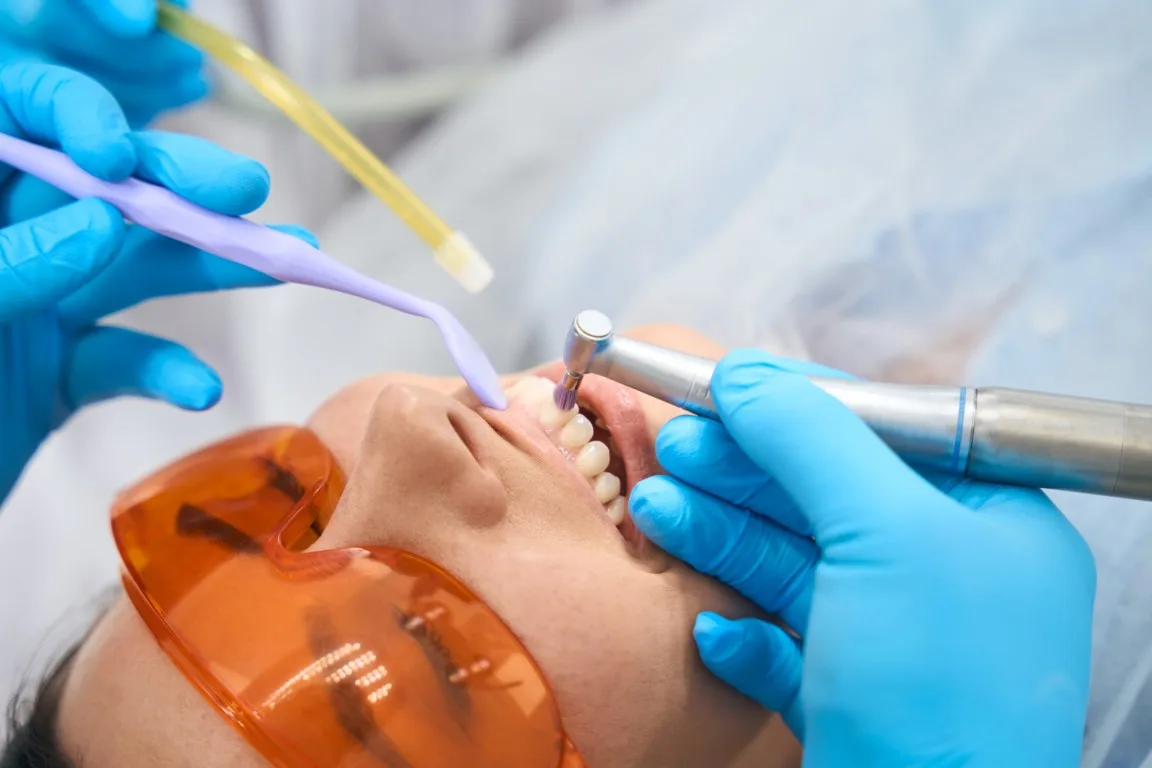
5. Professional cleaning (scaling and polishing). The hygienist removes tartar buildup from above and below the gumline. This is the part most patients think of as “the cleaning” — and it’s important — but it’s only one of nine steps in a proper visit.
6. Digital X-rays when indicated. Not every visit needs X-rays. Bitewing X-rays (between the back teeth) are typically taken once per year for most adults. A panoramic X-ray (the full-jaw view) is typically taken every 3-5 years. For high-risk patients, imaging happens more often. We use digital X-rays with dramatically lower radiation than older film systems.
7. Fluoride treatment. A quick application of fluoride varnish strengthens enamel and reduces cavity risk. It’s especially valuable for kids, patients with dry mouth, or anyone with a history of cavities. Takes 60 seconds.
8. Personalized home care recommendations. Based on what we find, I give you specific advice: areas you’re missing when brushing, whether you need a nightguard for grinding, whether your gum health needs more frequent cleanings, or whether a particular tooth needs to be watched.
9. Treatment planning for anything identified. If I find a problem — a small cavity, a failing filling, early gum disease, a worn tooth that needs protection — we discuss it openly. Cost, timing, alternatives. No pressure, no upsell, just honest information so you can make decisions with the full picture.
A typical visit in my office takes 45 to 60 minutes total. That’s what you’re actually getting for your insurance copay, and that’s why skipping visits is so expensive in the long run — because it’s nine chances to catch problems early, and you’re missing all of them.
Who Needs More Frequent Visits
For some patients, every six months isn’t enough. Here’s who I typically move to a three-to-four-month recall schedule and why.
Patients with a history of gum disease. Once periodontal disease is established, it becomes a chronic condition that can be managed but not cured. Bacteria rebuild in deep pockets faster than patients can control at home, and the difference between stable maintenance and disease progression is often whether the professional cleanings happen frequently enough. The CDC reports that nearly half of American adults over 30 have some form of periodontal disease, and most of them don’t know it. If you’ve been treated for gum disease, three-month maintenance visits are non-negotiable.
Diabetic patients. The relationship between diabetes and gum disease runs in both directions. Diabetes increases susceptibility to gum infections, and untreated gum infections make blood sugar harder to control. Tighter monitoring with more frequent cleanings protects both systems.
Patients with dry mouth. Reduced saliva flow dramatically accelerates cavity formation, especially on root surfaces. Patients with dry mouth from medications or medical conditions often need three-month cleanings to stay ahead of new decay.
Heavy tartar producers. Some people simply produce calculus faster than average, regardless of how well they brush. Genetics, saliva chemistry, and diet all play a role. If I see significant tartar buildup at six months, we shift to a shorter interval.
Smokers and tobacco users. Tobacco dramatically increases oral cancer risk and accelerates gum disease. More frequent screenings matter more for this group.
Pregnancy. Hormonal changes make gum tissue more reactive during pregnancy. Pregnancy gingivitis affects the majority of pregnant women, and more frequent cleanings help manage it. I cover the full picture in my post on dental care during pregnancy.
Orthodontic patients. If you’re in active orthodontic treatment — braces or aligners — the brackets and attachments make plaque removal harder. More frequent professional cleanings reduce the risk of permanent staining and decay around orthodontic hardware.
Patients with compromised immune systems. Cancer treatment, autoimmune conditions, organ transplant recipients, and other immunocompromised patients benefit from tighter monitoring.
History of oral cancer. Patients who’ve had head-and-neck cancer before are at elevated risk for recurrence or a second primary tumor. Three-month screening is standard of care.
If any of this applies to you, mention it to your dentist. You should never be on a six-month schedule by default when your specific situation calls for closer care.
What Happens When You Skip Visits
After 20+ years of watching patients come back after long absences, I can tell you exactly what the financial and health math looks like.
The cost curve is exponential, not linear. A small cavity caught at your six-month visit is a $200-$400 filling. Left alone for 18 months, that same decay spreads to the nerve and becomes a $1,500 root canal plus a $1,500 crown. Left longer, the tooth may be unsavable and you’re looking at an extraction plus a $5,000 implant. Same tooth, same starting point, ten times the cost.
Gingivitis becomes periodontitis. Gingivitis is completely reversible with a good cleaning and better home care. Periodontitis causes bone loss that doesn’t grow back. The window between reversible and permanent damage can be as short as 12-18 months of untreated inflammation.
Small chips become cracked teeth. A tooth with a small chip is fine — I might just smooth it and monitor. A chip that propagates into a full crack during six months of chewing forces can split the tooth beyond saving. My post on cracked tooth syndrome covers this in detail.
Oral cancer progresses. This is the one I don’t want any patient to learn the hard way. Stage I oral cancer caught early has a five-year survival rate around 85%. Stage IV oral cancer, which often takes 1-2 years to develop from a missed early lesion, drops that rate dramatically. The 60-second screening at your routine visit is a genuine life-saving tool.
Systemic health impacts. Research continues to link gum disease to heart disease, diabetes control, pregnancy complications, and emerging evidence on Alzheimer’s risk. Your mouth is not separate from your body, and chronic oral inflammation affects more than just your teeth.
I’m not trying to scare you. I’m telling you what I see every week. The patients who come in consistently have straightforward visits, low costs, and healthy mouths. The patients who disappear for years come back to significant problems that would have been easy to prevent.
The “Life Got Busy” Reality
Here’s the thing I understand as a practicing dentist in Huntington Beach: life gets busy. Work travel. Kids’ schedules. The cost of the copay. The inconvenience of taking an hour off mid-day. I’ve heard every reason, and I don’t judge any of them.
But here’s what I tell every patient who’s been absent: the longer you wait, the harder it becomes to come back. Not because treatment gets harder — because the shame gets harder. Patients who’ve been gone for five years start dreading the visit because they imagine being lectured. I don’t lecture. I literally don’t care how long it’s been. I care about where we go from here.
If you’ve been reading this thinking “this applies to me,” take that as your sign. Call the office. Schedule a visit. We’ll start with a thorough exam, figure out what’s going on, and build a realistic plan to get you back on track. The first visit back is almost always less dramatic than patients expect.
How We Approach Recall at Peninsula Dentistry
A few principles that guide how I set up patient schedules in my practice:
I don’t automate recall without thinking. Every patient’s risk profile is different. I look at your specific case — gum health, history, medications, habits — and recommend an interval that actually fits you, not a one-size-fits-all calendar.
Reminders matter. Our front desk team sends reminders via your preferred method (text, email, phone) when you’re due. If life is busy, missing the reminder shouldn’t mean missing the visit.
Short wait times, real availability. When you need to come in, you should be able to get an appointment within a reasonable timeframe — not pushed out six weeks because the schedule is overbooked. We maintain availability specifically because dental care that’s inconvenient gets skipped.
Family-friendly scheduling. I see multigenerational Huntington Beach families — parents, kids, grandparents — sometimes in back-to-back appointments so everyone gets taken care of in one visit. We try to make the logistics as easy as possible for busy families.
Honest treatment discussions. Whatever we find gets explained clearly — cost, options, urgency, what can wait. Your dentist works for you, not against you.
Frequently Asked Questions
Is a dental cleaning actually necessary if my teeth feel fine?
Yes, and this is the single biggest misconception I deal with. Cavities, gum disease, cracked teeth, and oral cancer are all common conditions that typically cause no symptoms until they’re advanced. Feeling fine is not evidence of health — it’s just absence of pain. Routine visits are how we catch problems while they’re small.
What happens if I have a cavity that I don’t treat?
It progresses. Cavities don’t heal themselves. A small cavity in enamel can be fixed with a quick composite filling. Left alone, the decay moves into the dentin (faster progression) and eventually reaches the nerve, at which point you need a root canal. Left even longer, the tooth may be unsavable and need extraction. The timeline varies, but “waiting to see what happens” always costs more than treating it early.
Does dental insurance actually cover two cleanings per year?
Almost always, yes. The vast majority of PPO dental plans cover two preventive cleanings and exams per year at 100%, meaning no out-of-pocket cost to you. This is the single best value in dental insurance. If you’re paying insurance premiums and skipping the cleanings, you’re paying for a benefit you’re not using. For more on getting the most out of your plan, read my post on maximizing dental insurance benefits.
I haven’t been to the dentist in 5+ years. How bad will it be?
Honestly, usually less bad than patients expect. We start with a full exam, appropriate X-rays, and a thorough assessment. Most long-absent patients have some accumulated issues but nothing catastrophic. We build a treatment plan to address what’s needed, phased over time if necessary. Starting now is always better than waiting another year. The hardest part is walking through the door — everything after that is just a plan.
Can I just get cleanings every year instead of every six months?
For most patients, no — or at least not without accepting more risk. Once-a-year cleanings leave a long window for tartar buildup, gum inflammation, and undetected problems. Some patients with excellent home care and low risk profiles might get by with annual visits, but this should be a conversation with your dentist, not a default. For patients in the risk groups I listed above (gum disease history, diabetes, dry mouth, etc.), annual cleanings are definitely insufficient.
Should my kids come to the dentist as often as adults?
Yes — every six months for most kids, starting by their first birthday or within six months of the first tooth appearing. Kids’ teeth are actually more vulnerable to decay because their enamel is thinner and their habits are less consistent. For more on pediatric visits, my post on your child’s first dental visit covers the full picture.
Related Reading
- Oral Cancer Screening: What Your Dentist Actually Looks For
- Gum Disease: Warning Signs You Shouldn’t Ignore
- How to Maximize Your Dental Insurance Benefits Before They Expire
Due for a checkup? Whether it’s been six months or six years, Peninsula Dentistry in Huntington Beach makes it easy to get back on track. Call (714) 374-8800 or book your appointment online. No judgment, no lectures — just good care.

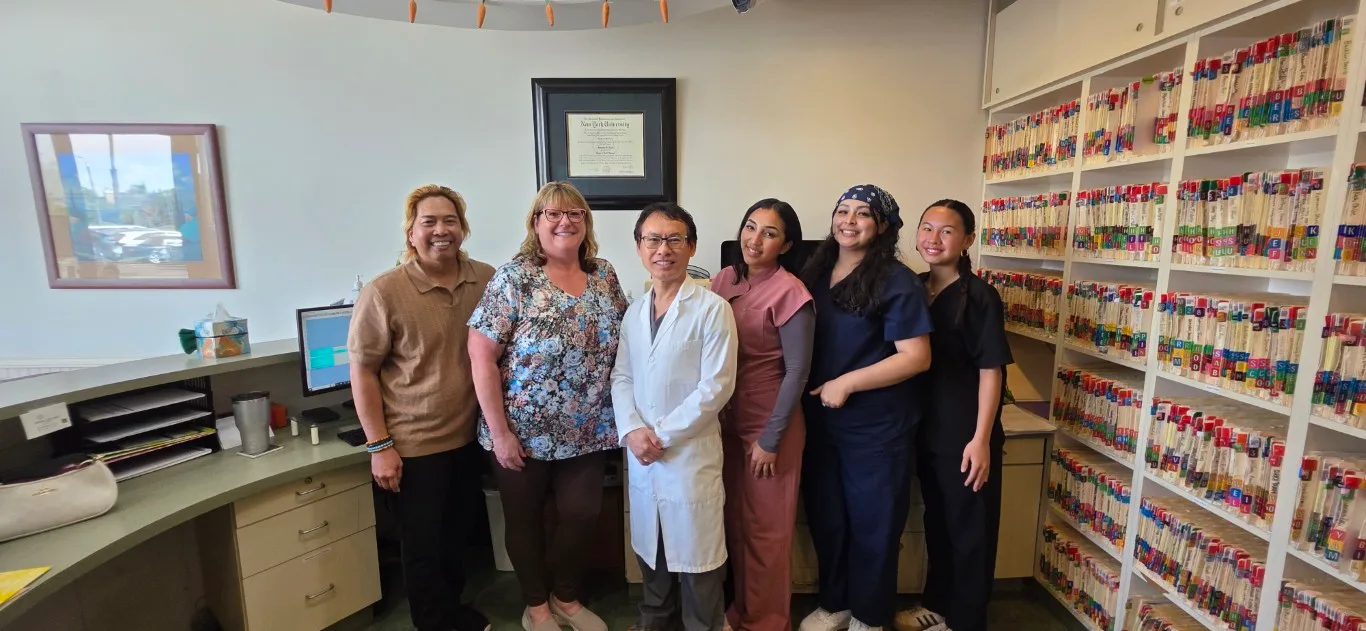
Dr. Kenneth Tran, DDS
AuthorDr. Tran earned his DDS from NYU College of Dentistry and has practiced dentistry in Huntington Beach for over 20 years. He provides comprehensive care from routine cleanings to complex implant cases at Peninsula Dentistry.