Here’s something that comes up in my office almost every day: a patient sits down for their regular checkup, everything feels fine to them, and then I show them what’s happening to their teeth. Flat spots on the biting surfaces. Cracks in the enamel. Gum recession that shouldn’t be there at their age. Tooth sensitivity that appeared out of nowhere.
“Do you grind your teeth at night?” I’ll ask.
The answer is almost always the same: “I don’t think so.”
That’s the thing about bruxism — the clinical term for teeth grinding and clenching. Most people who do it have no idea. It happens while you sleep. You don’t feel it, you don’t hear it (though your partner might), and by the time you notice the symptoms, the damage is already underway.
I’ve been treating patients in Huntington Beach for over 20 years, and if I had to name one condition that silently destroys teeth more than any other, it’s bruxism. The good news is that a custom nightguard is one of the simplest, most effective ways to protect your smile. Let me walk you through everything you need to know.
What Is Bruxism, Exactly?
Bruxism is the involuntary grinding, gnashing, or clenching of teeth. It comes in two forms:
Sleep bruxism happens unconsciously during sleep. This is the more destructive form because you have no awareness or control over it, and the forces involved are enormous — your jaw muscles can exert up to 250 pounds of force during sleep grinding. That’s far more than you’d ever use during normal chewing.
Awake bruxism is clenching or grinding during the day, often triggered by stress, concentration, or habit. You might catch yourself clenching during a stressful phone call or while staring at a computer screen. This type is easier to address because once you’re aware of it, you can consciously relax your jaw.
Both types cause damage, but sleep bruxism is the one that typically brings patients to my chair — because by the time they come in, things have already progressed.
Signs You Might Be Grinding Your Teeth
Most people discover they grind their teeth in one of three ways: their dentist sees the wear patterns, their partner hears the grinding at night, or they start experiencing symptoms they can’t explain. Here’s what to watch for:
Worn, flattened teeth. Your teeth should have rounded edges and defined cusps (the points on your molars). If they look flat, shiny, or shorter than they used to, that’s grinding wear. I see patients whose teeth are worn down so evenly it’s like they’ve been sanded.
Cracked or chipped teeth. Grinding puts repetitive stress on teeth, and eventually something gives. A tooth that cracks for “no reason” — no injury, no biting down on something hard — is one of the classic signs. These cracks often require crowns to restore, and in severe cases, they can split a tooth to the root, ending in extraction.
Jaw pain and stiffness. If you wake up with a sore, tight jaw, or have difficulty opening your mouth fully in the morning, your jaw muscles have been working overtime. The masseter muscle (the main muscle you use to chew) is one of the strongest muscles in the body, and it can become hypertrophied — visibly enlarged — from chronic grinding.
Headaches. Bruxism-related headaches typically present as a dull, constant ache in the temples. They’re worst in the morning because the grinding happens overnight. Many patients have been treating these as tension headaches for years without realizing the source.
Ear pain. The temporomandibular joint (TMJ) sits right in front of the ear. Bruxism inflammation in the joint can mimic earache. If your doctor has checked your ears and found nothing wrong, your jaw may be the culprit.
Tooth sensitivity. Grinding wears down enamel, the protective outer layer of your teeth. As enamel thins, the underlying dentin (which contains tiny nerve-connected tubes) becomes exposed, leading to sensitivity to hot, cold, and sweet.
Gum recession. The forces from grinding don’t just affect teeth — they’re transmitted to the surrounding bone and gum tissue too. Over time, this can cause gums to recede, exposing sensitive root surfaces.
Tongue scalloping. Look at the sides of your tongue. If you see indentations along the edges (like scalloped borders), you’re pressing your tongue against your teeth, which often accompanies clenching.
If you have two or more of these signs, there’s a strong chance you’re grinding. Bring it up at your next dental exam and we’ll take a closer look.
What Causes Bruxism?
This is where it gets complicated, because bruxism usually doesn’t have a single cause. It’s typically a combination of factors:
Stress and anxiety. This is the biggest one. When life is stressful — work pressure, financial worry, family stuff — many people clench and grind as an unconscious outlet. Living in Southern California is wonderful, but let’s be honest: traffic, cost of living, and the hustle of daily life create stress that has to go somewhere. For a lot of people, it goes straight to their jaw.
Sleep disorders. Bruxism is strongly linked to obstructive sleep apnea (OSA). When your airway partially closes during sleep, your brain triggers jaw clenching and grinding to reopen it. If you snore heavily, wake up tired despite sleeping enough hours, or have been told you stop breathing in your sleep, bruxism may be a symptom of a bigger issue.
Bite misalignment (malocclusion). When your teeth don’t fit together properly, your jaw muscles may try to “find” a comfortable position by grinding. An uneven bite creates uneven forces, and the body tries to compensate.
Medications. Certain antidepressants (especially SSRIs like sertraline and fluoxetine), stimulants (including ADHD medications), and recreational drugs can trigger bruxism. If you started grinding after beginning a new medication, tell both your doctor and your dentist.
Caffeine and alcohol. Heavy coffee consumption and alcohol use (especially in the evening) are both associated with increased bruxism. I’m not going to tell you to give up your morning coffee — I wouldn’t do that to a fellow Huntington Beach resident — but if you’re grinding, it’s worth noting.
Genetics. Bruxism runs in families. If your parents grind, you’re more likely to.
Custom Nightguard vs. Drugstore Nightguard
You can buy a boil-and-bite nightguard at any pharmacy for $20-$40. So why would you pay more for a custom one from your dentist? This is a fair question, and the answer comes down to fit, protection, and durability.
Drugstore Nightguards
These are made from a one-size-fits-some thermoplastic material. You boil them, bite down to create an impression, and wear them. They’re better than nothing, but they have real limitations:
- Poor fit. They’re bulky, don’t conform precisely to your teeth, and often feel uncomfortable enough that people stop wearing them.
- Thin material. They wear through quickly — often within a few months — especially if you’re a heavy grinder.
- Can alter your bite. A poorly fitting guard can actually change your bite alignment over time, creating new problems.
- Not designed for your specific grinding pattern. A generic guard doesn’t account for whether you grind side to side, clench vertically, or do both.
Custom Nightguards from Your Dentist
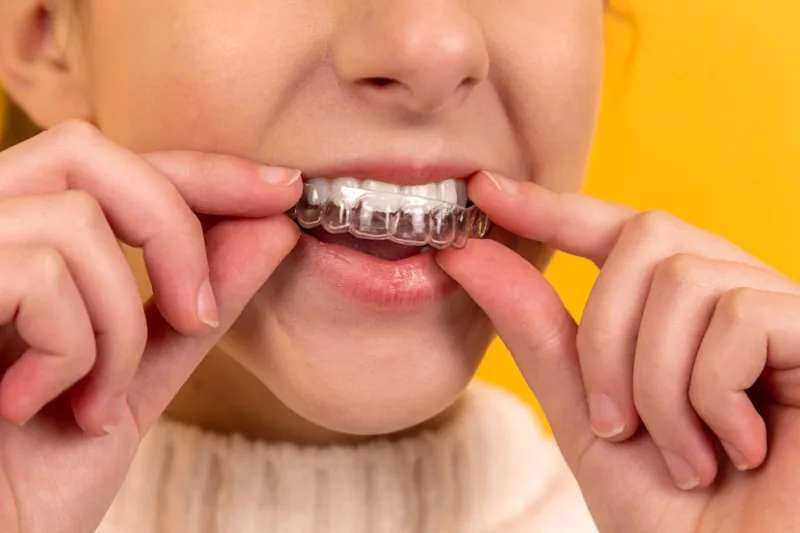
A custom nightguard starts with precise digital or physical impressions of your teeth. The guard is fabricated in a dental lab from professional-grade materials, designed to fit your exact bite.
- Precise fit. It snaps onto your teeth securely and feels comfortable — which means you’ll actually wear it.
- Proper bite surface. The opposing surface is adjusted so your jaw sits in its most relaxed, natural position. This reduces muscle strain and TMJ stress.
- Durable materials. Depending on the type (hard, soft, or dual-laminate), a custom guard lasts 3-5 years or longer with proper care.
- Tailored to your needs. A severe grinder needs a different thickness and material than a light clencher. We customize based on your specific patterns.
Cost in Orange County: A custom nightguard typically runs $300-$600. Many PPO dental insurance plans cover a portion of the cost. Considering that a single cracked tooth can cost $1,000-$2,000+ to repair with a crown, the nightguard pays for itself by preventing even one incident.

How a Custom Nightguard Is Made
The process is straightforward and takes two short appointments:
Visit 1: We take impressions of your upper and lower teeth (using digital scanning or traditional impressions) and a bite registration. This captures exactly how your teeth come together. The whole process takes about 15-20 minutes.
Lab fabrication: Your impressions go to a dental lab where technicians craft the guard from professional-grade materials. This takes about 1-2 weeks.
Visit 2: You come back for the fitting. We place the guard, check the fit, and make any adjustments. We’ll also show you how to insert and remove it properly, and how to care for it.
Most nightguards are made for the upper teeth, though in some cases a lower guard is more appropriate. We’ll determine which design works best for you.
The TMJ Connection
Bruxism and TMJ disorders (TMD) are deeply intertwined. The temporomandibular joint is the hinge that connects your jawbone to your skull, right in front of each ear. Chronic grinding overworks this joint and the surrounding muscles, leading to:
- Clicking, popping, or grating sounds when you open and close your mouth
- Pain in the jaw joint area
- Limited jaw opening (lockjaw)
- Pain that radiates to the face, neck, or shoulders
A custom nightguard helps by redistributing the forces of grinding across the entire guard surface rather than concentrating them on individual teeth and the joint. It also positions the jaw in a more relaxed state, reducing muscle tension.
For mild to moderate TMJ symptoms related to bruxism, a nightguard combined with jaw exercises and lifestyle modifications (stress management, limiting caffeine, sleeping position adjustments) is often enough. More severe TMD may require additional treatment, but the nightguard is almost always part of the equation.
When to See a Dentist About Grinding
Don’t wait for a tooth to crack. If you recognize the signs I described earlier — worn teeth, jaw pain, morning headaches, sensitivity — bring it up at your next dental visit. If symptoms are severe (significant jaw pain, teeth that are visibly worn or damaged, or difficulty opening your mouth), schedule an appointment sooner.
During your exam, I’ll look for wear patterns on your teeth, assess your TMJ function, check your bite alignment, and ask about your symptoms and lifestyle. From there, we’ll discuss whether a nightguard is the right move and what type would work best for you.
I also want to mention this: if you’re already wearing a nightguard and it’s showing significant wear (grooves, thin spots, holes), it’s doing its job — those grooves would have been on your teeth. But it’s time for a replacement. A worn-through guard offers limited protection.
Protecting the Investment in Your Smile
Here’s the way I think about it, and maybe my engineering background is showing: your teeth are a system, and grinding is a force that degrades that system over time. Every crown, every veneer, every filling you’ve ever had — grinding puts them all at risk. A $400 nightguard protects tens of thousands of dollars in dental work.
I’ve seen patients who’ve invested in beautiful crowns and veneers only to crack them within a year because they didn’t address their grinding. That’s heartbreaking — and preventable.
If you grind, a nightguard isn’t optional equipment. It’s as essential as the seatbelt in your car. You might never need it to save you, but the one time it does, you’ll be grateful it was there.
Frequently Asked Questions
How do I know if I grind my teeth at night?
Most nighttime grinders don’t know until a dentist spots the wear patterns or they develop symptoms. Common clues include waking with jaw soreness, morning headaches centered in the temples, unexplained tooth sensitivity, and a partner who hears grinding sounds. Flattened or chipped teeth are visible evidence.
How much does a custom nightguard cost in Huntington Beach?
Custom nightguards in the Orange County area typically cost $300-$600. Many PPO dental insurance plans cover part of this cost. Compared to the cost of repairing ground-down or cracked teeth — which can run thousands of dollars — a nightguard is one of the most cost-effective investments in dentistry.
Can a nightguard fix TMJ problems?
A nightguard can significantly reduce TMJ symptoms caused by bruxism by repositioning the jaw and distributing grinding forces. It’s not a cure for structural TMJ issues, but for the majority of patients whose TMD is bruxism-related, a well-made nightguard provides substantial relief.
How long does a custom nightguard last?
With proper care, a custom nightguard lasts 3-5 years for moderate grinders and 2-3 years for severe grinders. Clean it daily with cool water and a soft brush, store it in its ventilated case, and bring it to your dental appointments so we can check for wear.
Is a drugstore nightguard okay to use?
As a temporary measure, a boil-and-bite guard is better than nothing. But for long-term use, a custom guard is far superior in fit, comfort, durability, and protection. Poorly fitting over-the-counter guards can actually shift your bite over time, potentially creating new problems.
Can children grind their teeth?
Yes, and it’s fairly common — up to 30% of children grind, especially during sleep. In many cases, kids outgrow it as their jaw develops and permanent teeth come in. If your child’s grinding is severe or causing tooth damage, bring it up at their dental visit and we’ll assess whether intervention is needed.
Related Reading
- Dental Crowns vs. Veneers: Which One Do You Actually Need?
- How to Overcome Dental Anxiety: Tips From a Dentist Who Gets It
Think you might be grinding your teeth? Don’t wait for the damage to add up. Contact Peninsula Dentistry in Huntington Beach at (714) 374-8800 or schedule an appointment online. We’ll assess the situation and get you protected.

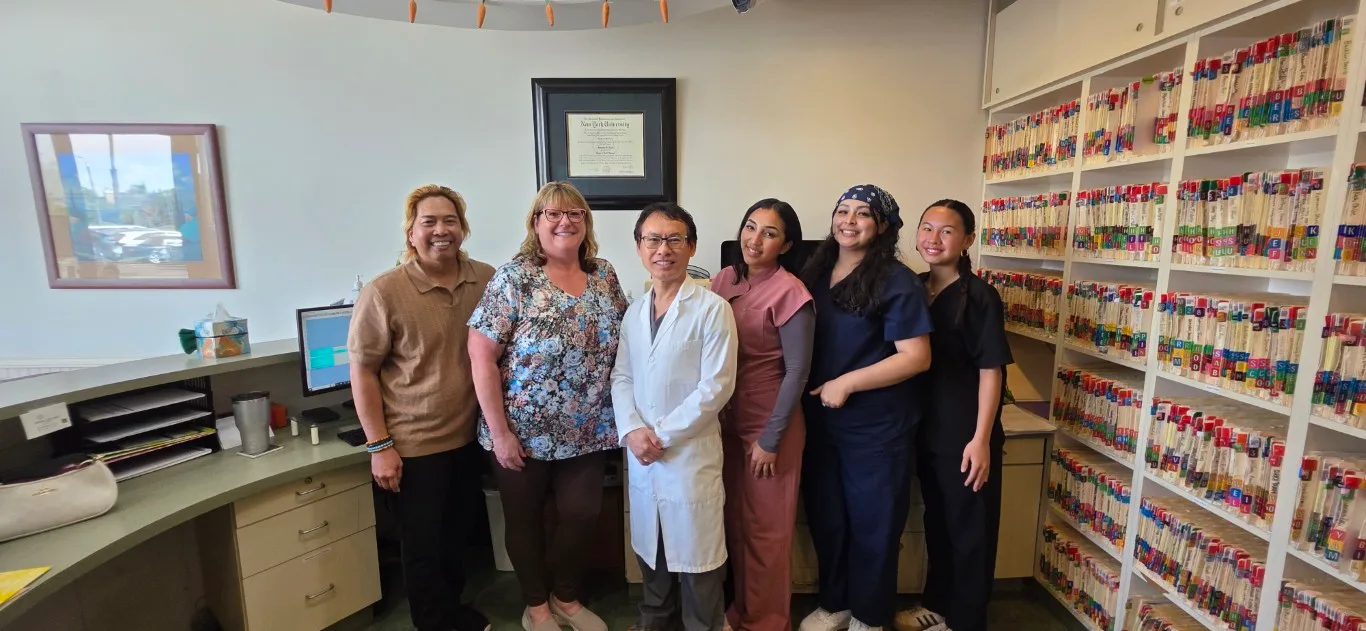
Dr. Kenneth Tran, DDS
AuthorDr. Tran earned his DDS from NYU College of Dentistry and has practiced dentistry in Huntington Beach for over 20 years. He provides comprehensive care from routine cleanings to complex implant cases at Peninsula Dentistry.