If there are two words in dentistry that make people tense up, it’s “root canal.” I get it. The reputation precedes the procedure. But here’s the thing — I’ve performed thousands of root canals over my 20+ years of practice in Huntington Beach, and the vast majority of my patients tell me the same thing afterward: “That was so much easier than I expected.”
The real discomfort isn’t the root canal itself. It’s the infected, inflamed tooth that’s causing the problem. The root canal is what makes the pain go away.
So let’s talk about the warning signs that you might need one, what actually happens during the procedure, and why putting it off is almost always a worse idea than getting it done.
What’s Actually Happening Inside Your Tooth
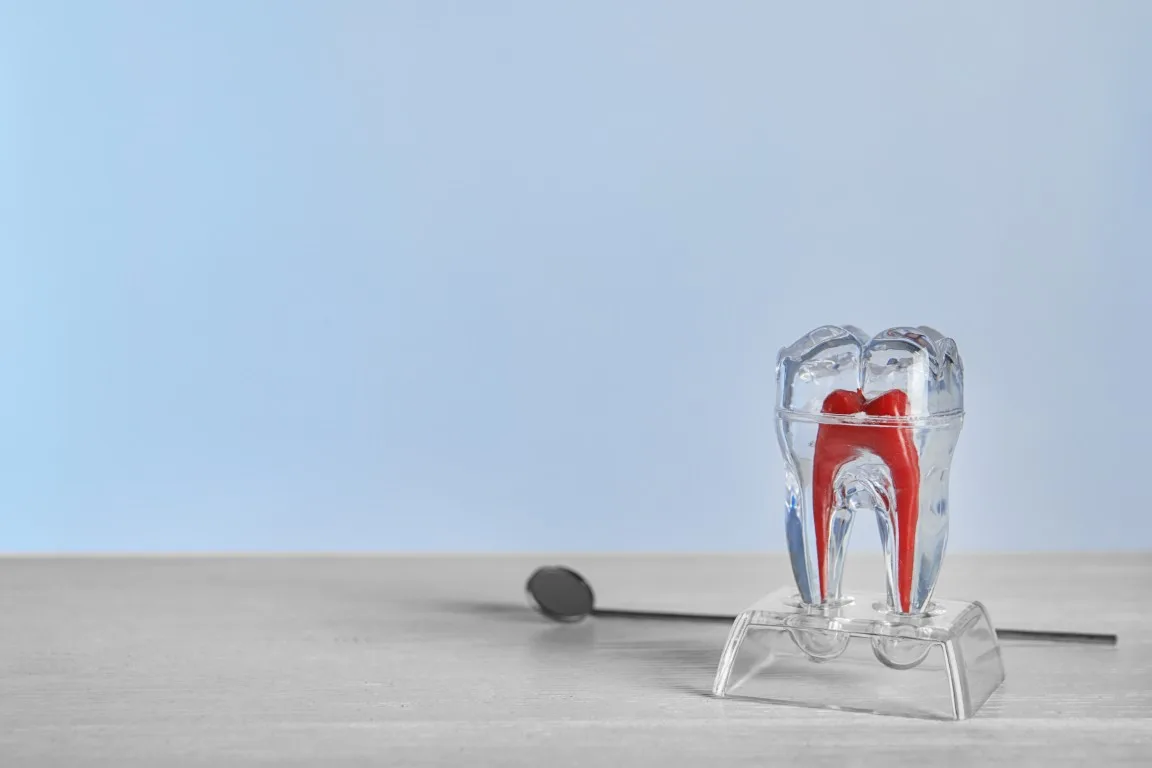
Before we get into the signs, it helps to understand what’s going on beneath the surface. Inside every tooth, under the hard enamel and dentin layers, is a soft tissue called the pulp. The pulp contains nerves, blood vessels, and connective tissue. It’s what kept the tooth alive and growing when it first came in.
When the pulp gets infected or inflamed — from deep decay, a crack, repeated dental procedures on the same tooth, or trauma — it can’t heal on its own. Unlike a cut on your skin that eventually closes up, an infected tooth pulp just gets worse. The bacteria multiply, pressure builds, and eventually the infection can spread to the bone and surrounding tissue.

A root canal removes the infected pulp, cleans and disinfects the inside of the tooth, and seals it up. The tooth stays in your mouth, and with a crown on top, it functions just like any other tooth.
Now here are the five signs that your tooth might be telling you it’s time.
Sign 1: Persistent, Throbbing Pain
I’m not talking about the occasional twinge you feel when you eat something cold. That can be normal sensitivity. I’m talking about a deep, constant, throbbing pain that radiates through your jaw or even up into your ear, temple, or eye socket.
This kind of pain is often the pulp screaming for help. The nerve inside the tooth is inflamed and swollen, but because it’s trapped inside a hard shell, there’s nowhere for the swelling to go. The pressure builds, and the pain intensifies.
Key characteristics of root-canal-level pain:
- It persists even after the trigger (hot food, cold drink) is removed
- It wakes you up at night
- It’s hard to pinpoint — you might feel like multiple teeth hurt
- Over-the-counter pain medicine takes the edge off but doesn’t eliminate it
- It gets progressively worse over days or weeks
If this sounds familiar, don’t wait. Call us. The longer you let an infected pulp go, the more complicated the treatment becomes.
Sign 2: Prolonged Sensitivity to Hot and Cold
Normal sensitivity is a quick zing that goes away in a second or two. What I’m looking for is sensitivity that lingers — you take a sip of hot coffee and the pain sticks around for 30 seconds, a minute, or longer after the cup is gone.
Lingering sensitivity to temperature, especially heat, is one of the most reliable indicators that the nerve inside your tooth is dying or already dead. Heat causes expansion inside the tooth, and if the pulp is inflamed, that expansion creates intense pressure and pain.
Here’s a test I sometimes walk patients through: hold a piece of ice against the suspect tooth for a few seconds, then remove it. If the pain subsides quickly, the nerve might still be healthy. If the pain lingers or intensifies after the ice is gone, the pulp is likely compromised.
Of course, don’t try to diagnose yourself at the kitchen table. But if you’re experiencing prolonged sensitivity, it’s worth getting checked out sooner rather than later.
Sign 3: Darkening or Discoloration of the Tooth
When a tooth starts to turn gray, dark yellow, or brownish compared to the teeth around it, that’s often a sign that the pulp inside has died. The breakdown products from the dying tissue seep into the dentin layer and change the tooth’s color from the inside out.
This is especially noticeable on front teeth. I’ve had patients come in concerned about a single front tooth that looks darker than the others — and when we test it, sure enough, the nerve is no longer vital.
A darkened tooth doesn’t always hurt. Some teeth die quietly without the dramatic pain I described above. But just because it doesn’t hurt doesn’t mean there isn’t a problem. A dead tooth can still harbor bacteria and develop an infection at the root tip that damages the surrounding bone.
If one of your teeth is changing color, let us take a look. A simple vitality test can tell us whether the nerve is alive or not, and we can make a plan from there.
Sign 4: Swollen, Tender Gums Near the Affected Tooth
Swelling in the gum tissue near a specific tooth is a red flag. It often means the infection inside the tooth has spread beyond the root tip and into the surrounding tissue. You might notice:
- A small bump on the gum that looks like a pimple (this is called a fistula — it’s the body’s way of draining the infection)
- General puffiness or tenderness in the gum near one tooth
- A bad taste in your mouth if the fistula is draining
The gum swelling might come and go. Some patients tell me, “It swelled up a few weeks ago but then got better, so I thought it was fine.” What actually happened is that the infection found a way to drain, which temporarily relieved the pressure. But the underlying problem — the infected pulp — is still there, and it will flare up again.
Gum swelling related to a tooth infection is different from gum disease. With gum disease, the swelling and bleeding tend to be more generalized — multiple areas of the gums are affected. With a pulp infection, the swelling is localized to one specific tooth.
Sign 5: Pain When Chewing or Touching the Tooth
If biting down on a tooth or even just pressing on it with your finger causes a sharp, shooting pain, the tissue around the root is likely inflamed. This condition is called periapical inflammation, and it means the infection has reached the bone at the tip of the tooth’s root.
This is the sign that tells me the infection has progressed. The tooth itself might not be the one hurting — it’s the bone and ligament around the root reacting to the infection. Patients often describe it as a feeling that the tooth is “raised up” or higher than the others, like it’s sitting wrong in its socket.
Sometimes this pain develops after a tooth has had a large filling or repeated dental work. Each time we work on a tooth, the nerve inside takes a hit. After enough procedures, the pulp can give up and die, leading to infection. That’s not a failure of previous treatment — it’s just the reality of how teeth work.
What a Root Canal Actually Involves
Okay, let’s demystify this. Here’s exactly what happens when you sit in my chair for a root canal at Peninsula Dentistry.
Step 1: We get you numb. This is the most important step. I don’t start working until you are completely comfortable. Modern anesthetics are highly effective, and I use techniques that ensure even infected teeth — which can be harder to numb — are fully anesthetized.
Step 2: We isolate the tooth. A small rubber sheet called a dental dam goes around the tooth. This keeps the area dry and prevents debris from going anywhere it shouldn’t. It also makes the procedure more comfortable because you don’t have to worry about water pooling in the back of your throat.
Step 3: We access the pulp. I create a small opening in the top of the tooth to reach the pulp chamber and root canals. This is done with precision — we’re preserving as much tooth structure as possible.
Step 4: We clean out the canals. Using specialized instruments and irrigating solutions, I remove the infected pulp tissue and bacteria from the root canals. This is the part that’s actually solving the problem. The canals are shaped and disinfected thoroughly.
Step 5: We fill and seal the canals. Once the canals are clean and dry, they’re filled with a biocompatible rubber-like material called gutta-percha and sealed. This prevents bacteria from re-entering.
Step 6: We restore the tooth. A root canal removes the internal structure of the tooth, which makes it more brittle over time. In most cases, I recommend a crown to protect the tooth and restore its full function. We’ll discuss timing and options for the crown at the same appointment.

The whole procedure typically takes 60-90 minutes. Most patients need only over-the-counter pain medication afterward, and many tell me they feel better immediately because the source of their pain is gone.
Modern Root Canal Technology
Root canal treatment in 2026 is nothing like what it was even 15 years ago. The tools and techniques have advanced dramatically:
- Rotary instruments make the cleaning process faster, more thorough, and more precise than the old hand-filed approach
- Digital X-rays and advanced imaging allow me to see the root anatomy clearly before and during the procedure
- Better irrigating solutions kill bacteria more effectively
- Improved anesthetics work better, even on inflamed and infected teeth
- Biocompatible filling materials create a more reliable seal
The success rate for root canal treatment is above 95%. That’s an excellent outcome for any medical or dental procedure.
Recovery: What to Expect Afterward
Most patients return to normal activities the same day or the next day. Here’s the typical recovery timeline:
Day 1-2: Mild to moderate soreness in the area, manageable with ibuprofen. The tooth may feel slightly different — this is normal. The infection was pressing on the nerve in the surrounding bone, and it takes a day or two for that inflammation to resolve.
Day 3-7: Significant improvement. Most patients are back to eating normally, though I’d recommend chewing on the other side until you get the permanent crown.
Day 7+: Full comfort. If you’re still experiencing significant pain after a week, call us — it’s rare, but sometimes additional treatment is needed.
What helps recovery:
- Take ibuprofen as directed for the first 24-48 hours
- Avoid chewing on the treated tooth until the crown is placed
- Continue brushing and flossing normally
- Keep your follow-up appointments
When Extraction Is the Better Option
I’ll always try to save a tooth when it makes clinical sense. But I’ll be honest with you — sometimes a tooth is too far gone. Situations where extraction might be the better call:
- Extensive root fracture. If the root itself is cracked vertically, a root canal can’t fix it. The tooth will need to come out.
- Severe bone loss. If the infection has destroyed a significant amount of bone around the tooth, saving the tooth may not be viable.
- The tooth isn’t restorable. If there’s not enough healthy tooth structure above the gumline to support a crown, a root canal won’t help.
- Multiple failed previous treatments. Sometimes a tooth that’s had a root canal fails and retreatment isn’t likely to succeed.
When extraction is necessary, we discuss replacement options — usually a dental implant — at the same visit. The goal is always to maintain your function and your smile.
Dr. Tran’s Approach: Gentle, Honest, and Thorough
I’ve been doing this long enough to know that most people sitting in my chair with a tooth that needs a root canal are nervous. Maybe it’s their first root canal, or maybe someone told them a horror story from 1987.
Here’s what I tell every patient: my job is to get you out of pain, save the tooth if possible, and make the experience as comfortable as I can. I explain everything I’m doing before and during the procedure. If you need a break, we take a break. If you’re anxious, we talk through it.
I built this practice on relationships, not transactions. Many of my patients have been coming to Peninsula Dentistry for 15, 20 years. Their kids are my patients now. They trust me because I’ve always been straight with them — if you need a root canal, I’ll tell you. If you don’t, I’ll tell you that too. And if you need something I’m not the best person for, I’ll refer you to someone who is.
If you’re experiencing any of the signs I’ve described — don’t wait. The sooner we address it, the simpler the treatment and the better the outcome.
Frequently Asked Questions
How painful is a root canal compared to getting a filling?
Honestly, for most patients, it’s comparable. The procedure itself is painless because you’re fully numbed. The main difference is that it takes longer than a filling — typically 60-90 minutes — and the recovery involves a few days of mild soreness. But the pain from the infected tooth you had before the root canal? That’s usually far worse than anything the procedure itself involves.
Can I drive home after a root canal?
Yes. Root canals are done under local anesthesia — you’re awake the entire time. Your mouth will be numb for a few hours afterward, so avoid eating until the numbness wears off so you don’t accidentally bite your cheek or tongue. But you’re perfectly fine to drive.
How long does a root-canal-treated tooth last?
With proper care and a well-fitted crown, a root-canal-treated tooth can last a lifetime. Studies show success rates above 95% at the 10-year mark. The key factors are getting a crown placed promptly after the root canal and maintaining good oral hygiene.
Is it better to pull the tooth and get an implant instead?
Not necessarily. Saving your natural tooth is almost always the preferred option when it’s viable. Your natural tooth has a periodontal ligament that cushions it and provides sensory feedback — an implant doesn’t. Root canals are also typically less expensive than extraction plus implant. However, if the tooth is severely compromised, extraction and implant might be the more predictable long-term solution. We’ll discuss both options honestly.
What happens if I ignore a tooth that needs a root canal?
The infection doesn’t resolve on its own. At best, it becomes a chronic low-grade infection that slowly destroys the bone around the root. At worst, it flares up into an acute abscess with severe pain, swelling, and the potential to spread to other areas of your head and neck. It can even become a medical emergency. Please don’t ignore it — call us.
Related Reading
- Root Canal Recovery Timeline: What to Expect Day by Day
- Root Canal vs. Tooth Extraction: When to Save and When to Pull
- What to Do in a Dental Emergency (Before You Reach the Dentist)
- Dental Crowns vs. Veneers: Which One Do You Actually Need?
Think you might need a root canal? Dr. Tran can evaluate your tooth and give you a straight answer. Call Peninsula Dentistry in Huntington Beach at (714) 374-8800 or schedule online. We make root canals as painless as the reputation says they shouldn’t be.

Dr. Kenneth Tran, DDS
AuthorDr. Tran earned his DDS from NYU College of Dentistry and has practiced dentistry in Huntington Beach for over 20 years. He provides comprehensive care from routine cleanings to complex implant cases at Peninsula Dentistry.