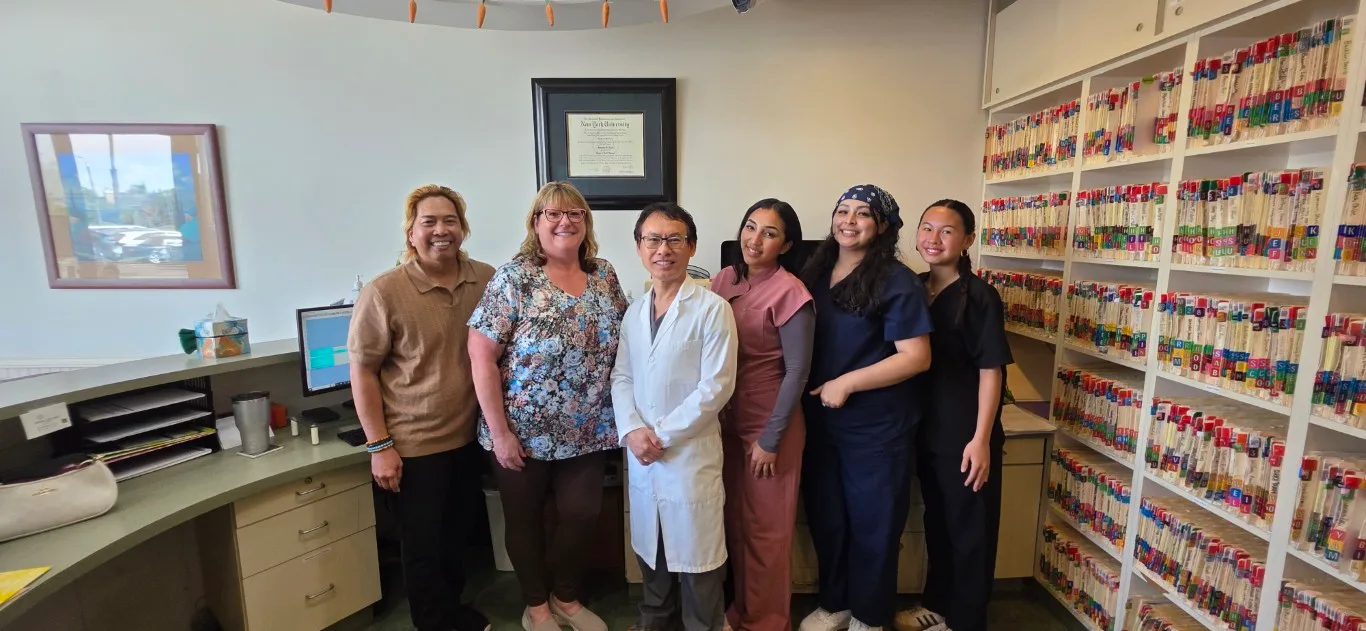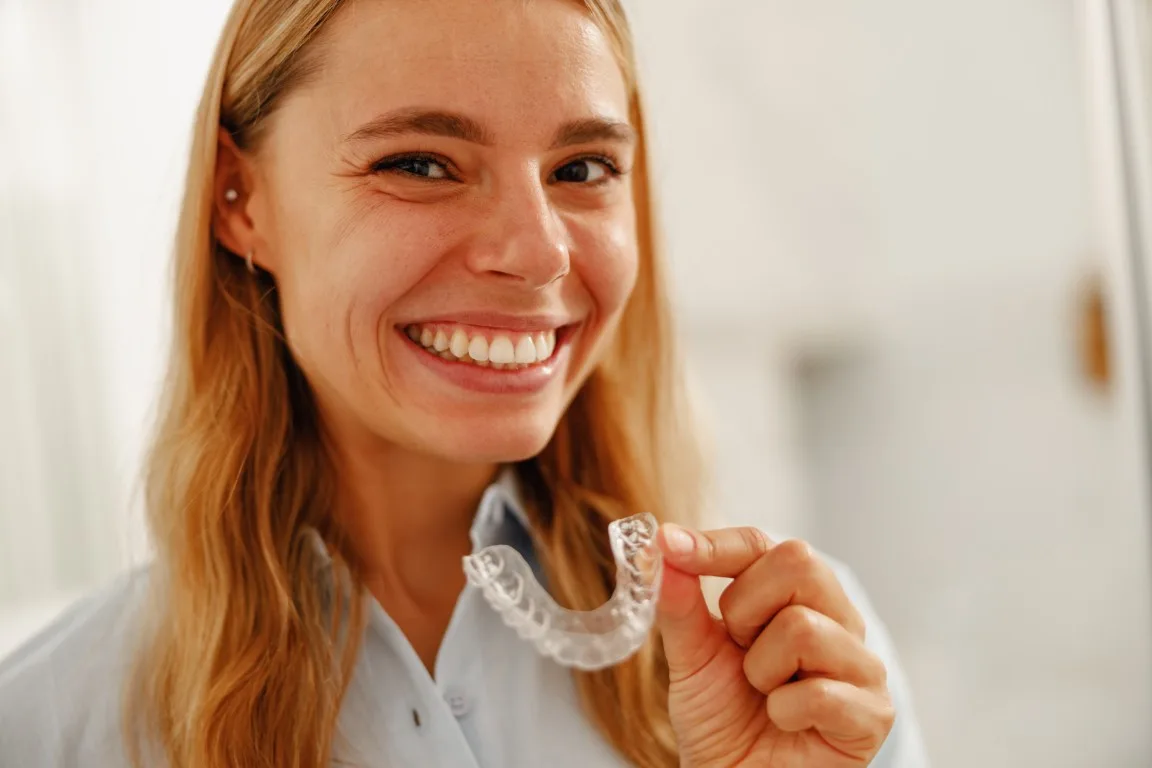
A patient walked into our Huntington Beach office last month with very clear intent: “I want clear aligners. Not braces. I’ve already decided.” That preference makes sense. Aligners have become the default assumption for many adults who want a straighter smile without visible brackets, and most of the time that assumption is reasonable. Sometimes it is not.
At Peninsula Dentistry, this conversation comes up often. “Aligners vs. braces” is not really about which product is better. It is about which one is better for your specific case, your bite, your compliance, and your long-term dental health. This guide walks through what actually matters when you are making that decision.
The Short Version (For People Who Hate Long Articles)
If you want the quick answer before the deep dive:
- Clear aligners work great for mild to moderate crowding, spacing issues, adult relapse, and minor bite corrections in disciplined patients who will wear them 20-22 hours a day.
- Traditional braces are more reliable for complex cases — severe crowding, significant bite problems, vertical tooth movements, patients with poor compliance, and young teens whose jaws are still growing.
- Cost is comparable: both run $4,000-$7,000 in the Huntington Beach area depending on case complexity.
- Treatment time is similar: 9-24 months for most cases with either approach.
- The provider matters more than the product. An experienced provider with the right treatment plan will outperform a less-experienced provider using the trendiest product every time.
If you just wanted the TL;DR, there it is. If you’re making a real decision, keep reading — the details are where the important stuff lives.
How Clear Aligners Actually Work
Clear aligners are a series of custom-made, nearly invisible plastic trays that gradually shift your teeth into alignment. You wear each set for about one to two weeks, then switch to the next one in the series. They’re removable — you take them out to eat, drink anything other than water, and brush. And they do their job quietly: most people won’t notice you’re wearing them.
The mechanics: each tray is shaped slightly differently from your current tooth positions, forcing your teeth to move toward a target position with gentle, continuous pressure. After 12-14 days of wear, the tray has done its work and your teeth have caught up to it. Then you move to the next tray, which represents the next small movement in the plan. This continues until the final tray matches your target outcome.
For the aligners to actually grip your teeth and deliver precise force, we typically bond small tooth-colored composite “attachments” onto specific teeth. These are barely visible but critical — without them, certain movements that aligners are designed to do simply don’t happen reliably.
Clear aligners sound simple because the marketing is simple. The actual treatment planning is not. Every case we take on is reviewed and adjusted based on biomechanics, bite, and aesthetic goals. The software is a starting point, not the final answer.
How Traditional Braces Actually Work
Traditional braces use metal or ceramic brackets bonded directly to each tooth, connected by a wire that applies continuous pressure. Over the course of treatment, we swap the wires for progressively stiffer ones and use small rubber bands or other elastic elements to direct tooth movement in three dimensions. Visits happen every 4-6 weeks for adjustments.
The key mechanical advantage braces have over aligners: fixed appliances can apply force in any direction we choose, including vertical movements (pushing a tooth up or down into the bone) and rotation of short, rounded teeth that aligners struggle with. Braces can also harness natural jaw growth in teens, which is a big deal for correcting overbites and underbites during adolescence.
The trade-off is visibility and care routine. Brackets and wires trap food. Oral hygiene takes more work. There are temporary soft-food restrictions for certain foods. And yes — they’re visible, though modern brackets are significantly smaller and less obtrusive than what you might remember from the 1990s. For patients who want the aesthetic benefit without the metal look, tooth-colored ceramic brackets are an option. They’re the same mechanics, just in a color that blends with natural teeth.
When Clear Aligners Are the Right Choice
Here’s the honest list of cases where we recommend aligners without hesitation:
Mild to moderate crowding or spacing. Crowded lower front teeth, small gaps between upper front teeth, slight rotation of individual teeth — these are aligner strengths. The movements are predictable and the trays can deliver the right forces.
Adult relapse cases. This is probably the most common adult orthodontic case we see in Huntington Beach. A patient had braces as a teenager, didn’t wear their retainer (we hear this a lot), and their teeth gradually shifted over the years. Now they’re 38 and their lower front teeth look crowded again. This is almost always an ideal aligner case — the movements needed are small and the total treatment time is usually short.
Mild bite corrections. Small overbites, minor crossbites, and slight deep bites can often be addressed with aligners, sometimes combined with small elastics.
Patients in professional or public-facing roles. If your job involves a lot of face-time — sales, client work, teaching, customer service — the aesthetic advantage of aligners is real, and it might be the difference between moving forward with treatment and putting it off indefinitely. A treatment you actually start is better than the “perfect” treatment you keep postponing.
Disciplined, motivated patients. Aligners only work if they’re in your mouth. The target is 20-22 hours per day, every day. If you’re the type who remembers things, follows instructions, and commits to routines — aligners work beautifully. If you’re not, braces are more forgiving because they’re bonded in place.
When Braces Are the Right Choice
Here’s when we tell patients — sometimes against their initial preference — that braces are a better investment:
Severe crowding. When teeth are significantly overlapped, rotated, or impacted, aligners may not have enough force leverage to deliver the movements reliably. Braces handle complex three-dimensional movements more predictably.
Complex bite problems. Deep overbites (where upper teeth overlap lower teeth excessively), severe open bites (where front teeth don’t come together at all), significant crossbites, and major jaw discrepancies often need the finer control that fixed brackets and wires provide.
Vertical tooth movements. Moving a tooth up or down — extruding a tooth that’s sitting too low, or intruding one that’s sticking out — is one of the hardest things to do with aligners. Braces do this significantly better.
Growing teens. Early adolescence is a unique window when jaw growth is still active and can be harnessed to correct bite issues. Fixed appliances coordinate with elastics and sometimes headgear to guide that growth. Aligners can work in some teen cases, but for complex bite correction in growing kids, braces often remain the better choice. If you want more on timing, our post on the best age to get braces covers the age-7 evaluation and Phase 1 treatment in detail.
Teens or adults with poor compliance risk. We’ve had more than a few aligner cases that stalled because the patient simply didn’t wear them enough. Not because they didn’t want treatment — because life got busy, or the trays were uncomfortable for the first few days of a new set and they kept them out. Braces don’t have this problem. They work whether you want them to or not, because they’re physically bonded to your teeth.
Cases requiring extractions. Complex cases that involve removing teeth to create space often need precise mechanical control to close the extraction gaps correctly. Braces are usually more predictable for this.
Our approach: We do not recommend aligners because they are trendy, and we do not recommend braces out of habit. We recommend what will deliver the best outcome for the specific case in front of us.
Cost Comparison in Orange County
Here are realistic numbers for the Huntington Beach and broader Orange County area:
- Clear aligners (Invisalign Comprehensive): $4,500 – $7,500
- Clear aligners (simpler cases, Invisalign Lite or Express): $3,500 – $5,500
- Metal braces (comprehensive treatment): $4,000 – $7,000
- Ceramic/clear braces: $4,500 – $7,500
The gap between braces and aligners is smaller than most patients expect. The biggest cost driver is case complexity, not treatment type.
Most PPO dental insurance plans include an orthodontic benefit — typically a lifetime maximum of $1,500 to $2,500. Coverage is usually the same for braces and aligners under modern plans. We verify your benefits before any treatment begins and give you a clear out-of-pocket estimate. We also offer monthly payment plans that spread the cost across the treatment duration, making orthodontic care accessible even when the lifetime max doesn’t cover everything. Our insurance and payment page has the full breakdown.
Treatment Time: What to Realistically Expect
Most comprehensive orthodontic cases — whether braces or aligners — take 12 to 24 months. Simple cases can finish in as little as 6 months. Complex cases can take 30+ months. The treatment length depends almost entirely on what needs to happen, not on which product is used.
A few specific patterns we see:
Short aligner cases (6-10 months): Mild adult crowding or spacing in a disciplined patient. These are the “Invisalign Express” or “Lite” cases you see advertised.
Standard aligner cases (12-18 months): Moderate crowding, some bite correction, full adult comprehensive treatment.
Standard braces cases (12-24 months): Teens with comprehensive orthodontic needs, adults with more involved cases, patients with bite correction requirements.
Long cases (24-30+ months): Complex bite issues, significant jaw discrepancies, extraction cases, or orthognathic surgery cases regardless of aligners or braces.
The single biggest factor in treatment length isn’t the product — it’s compliance. A teen who keeps their aligners in 22 hours a day finishes in 14 months. A teen who wears them 12 hours a day stretches the same case to 24 months or stalls completely. Braces finish faster in low-compliance patients simply because they’re not removable.
The Careful Planning Advantage
One thing worth understanding if you’re shopping around: general dentists can offer clear aligner treatment after completing a short certification course. For simple cases, this works fine. For complex cases, the outcomes are often compromised in ways patients don’t recognize until treatment is finished and the bite isn’t right.
At Peninsula Dentistry, every orthodontic case starts with a careful clinical plan built around tooth movement, bite correction, and jaw development. That planning matters for:
- Recognizing case complexity upfront — knowing when a case needs braces instead of aligners before starting treatment
- Precise attachment placement — for aligner cases, the composite attachments we bond to teeth are engineered for each specific movement
- Mid-course corrections — catching a deviation from the plan and adjusting before it becomes a problem
- Bite finishing — making sure the final bite is functional, not just cosmetically aligned
There is also a real benefit to keeping Dr. Tran involved when orthodontic treatment intersects with restorative work like crowns, implants, or cosmetic bonding. The Cleveland Clinic has a good overview of orthodontic treatment options if you want additional reading on how the specialties overlap.
Our Orthodontic Philosophy
A few principles we follow on every case:
The right treatment for the case, not the product of the month. Aligners are a great tool when the case fits. They’re not a one-size-fits-all solution. We’ll always tell you honestly what we think will work best.
Thorough planning, not software automation. The treatment-planning software that drives aligner cases is impressive, but it’s not making final decisions. Every step of every case is reviewed and adjusted by a clinician.
Honest expectations before we start. Before you commit to anything, you know the approximate number of trays (for aligners) or months (for braces), the expected treatment time, the cost, what compliance looks like, and what the likely finish will look like. No surprises halfway through.
Finish properly, then retain. We don’t declare victory until the bite is right. And we don’t let any patient walk out without understanding that retainers are forever. Teeth want to move, and they will, without something holding them in place. The American Association of Orthodontists recommends lifetime nightly retainer wear, and so do we.
Life With Aligners vs. Life With Braces
Here’s the practical reality that product advertising doesn’t capture.
With aligners:
- You remove them to eat and drink anything other than water
- You brush your teeth after every meal before putting them back in (this is the hidden compliance cost)
- The first few days of each new tray set are mildly uncomfortable — tightness and pressure, not sharp pain
- Speaking takes a few days of adjustment with each new set
- Travel means carrying your trays, the next set, and removal tools
- No food restrictions
- Nearly invisible to other people
- Losing an aligner at a restaurant is a bad day
With braces:
- Bonded in place, so compliance isn’t a factor
- Harder to clean — you’ll learn to use floss threaders and small interdental brushes
- Occasional soft-food days when wires are adjusted
- Avoid popcorn kernels, hard candy, sticky caramels, and biting directly into crunchy foods
- Visible, though modern small brackets or ceramic options are less obtrusive
- Risk of bracket pop-offs that require a quick office visit
- No remembering to put anything in or take it out
Neither is objectively better. They’re different trade-offs. We ask patients to think honestly about which set of trade-offs fits their life better before we start. Both options produce great results when matched to the right case and followed through.
What About Direct-to-Consumer Aligners?
We need to address this because patients ask about it regularly. There are companies that sell mail-order aligners without in-person supervision. You take your own impressions at home, ship them in, and get trays delivered. It’s cheaper upfront, no office visits required.
Our honest assessment: for a narrow category of extremely mild cases with healthy teeth and gums, these services can produce acceptable results. For anyone else, we’d be cautious. The problems we’ve seen include:
- Cases where underlying gum disease or tooth decay wasn’t caught before treatment, because no dentist examined the patient
- Bite problems that developed during treatment because nobody was monitoring progress in person
- Root damage from forces that were too aggressive for the specific anatomy
- Finished “results” that look cosmetically acceptable but have bite problems the patient doesn’t realize until years later
we’ve ended up finishing several cases that started with direct-to-consumer aligners, and the corrections often cost more than doing it right the first time. A consultation with a licensed dental professional is free at most offices, including ours. Before you commit to a DIY product, at least have someone qualified look at your actual mouth.
Frequently Asked Questions
Can I switch from aligners to braces mid-treatment?
Yes, and sometimes we do. If we see that aligners aren’t delivering the expected movements after a few months, we’ll have an honest conversation about whether to switch approaches rather than waste more time and money on the wrong tool. This is one of the advantages of working with a specialist — we monitor progress closely and adjust when needed.
Are clear aligners painful?
You’ll feel pressure and mild tightness each time you switch to a new tray. Most patients describe it as soreness that fades within 24-48 hours. It’s comparable to the feeling after a braces adjustment. Over-the-counter pain relievers help if needed. The discomfort is proof the aligners are working.
How long will I need to wear a retainer after treatment?
Forever, if you want to keep the results. We know that’s not what people want to hear, but teeth naturally shift throughout your life, and the only reliable way to hold them in place is nightly retainer wear. Many patients who lose their retainers and stop wearing them come back 10-15 years later needing treatment again. Don’t be that patient.
Will my insurance cover clear aligners or braces?
Most PPO dental plans with orthodontic benefits cover both treatments, typically at the same rate. Lifetime maximums usually range from $1,500 to $2,500. We verify your specific benefits upfront and walk you through exactly what you’ll pay out-of-pocket before you commit. For a deeper dive on insurance strategy, see Dr. Tran’s post on maximizing dental insurance benefits.
What age is best to start orthodontic treatment?
The American Association of Orthodontists recommends a first evaluation at age 7. That doesn’t mean treatment at age 7 — it means we assess how the jaw is growing and whether early intervention would help. Most kids we see at that age just need monitoring. For adults, there’s no age limit. We’ve successfully treated patients in their 60s and 70s. What matters is bone and gum health, not the number on your license.
Is Invisalign specifically better than other clear aligners?
Invisalign is the brand name we work with most often because the software and research base are the most established. Other brands like Spark and ClearCorrect can also produce excellent results when the case is appropriate. The brand matters less than the provider’s experience and the case selection. If you want the deeper comparison, we wrote a full post on Is Invisalign right for you that gets into the specifics.
Related Reading
- Is Invisalign Right for You? An Honest Look at Clear Aligner Treatment
- What’s the Best Age to Get Braces? A Huntington Beach Orthodontist Explains
- Dental Crowns vs. Veneers: Which One Do You Actually Need?
Not sure which option is right for your smile? Schedule a complimentary orthodontic consultation at Peninsula Dentistry in Huntington Beach. Call (714) 374-8800 or book online. We’ll give you an honest assessment — aligners, braces, or something else — so you know exactly what will work for your case.

Dr. Kenneth Tran, DDS
AuthorDr. Tran earned his DDS from NYU College of Dentistry and has practiced dentistry in Huntington Beach for over 20 years. He provides comprehensive care from routine cleanings to complex implant cases at Peninsula Dentistry.