A patient sat down in our Huntington Beach office last month with a very specific question: “I want Invisalign. Not braces, not something else. Invisalign.” She had seen an ad, talked to a friend, and arrived with a clear idea of what she wanted. After an exam, the honest answer was more useful than the easy one: Invisalign could work in some cases, but the right recommendation depends on the bite, the tooth movements needed, and the patient’s ability to wear trays consistently.
That conversation happens often at Peninsula Dentistry, and it is worth having in public. Invisalign is an excellent product when it is the right fit for the case. It is a frustrating waste of time and money when it is not. This post breaks down who should get Invisalign, who should choose traditional braces or a different aligner brand, and what an honest treatment plan actually looks like.
What Invisalign Actually Is (And What It Isn’t)
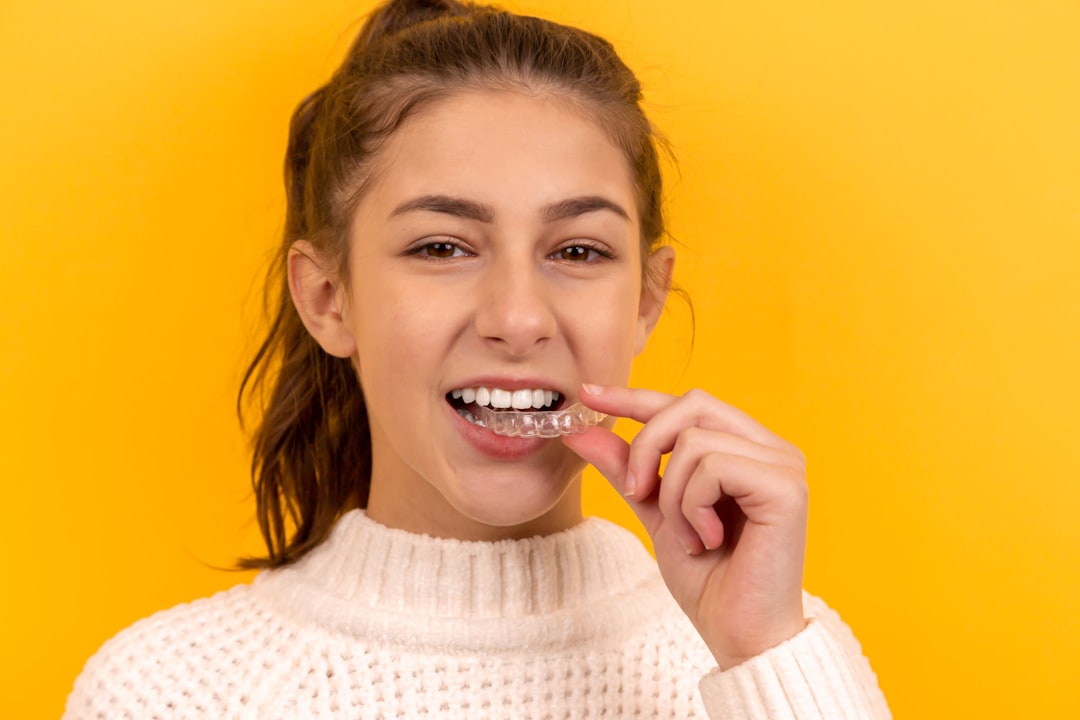
Invisalign is a brand name, not a category. Clear aligner treatment as a whole is a broad field with multiple manufacturers: Invisalign (Align Technology), ClearCorrect, Spark, SureSmile, and several others. They all use similar principles — a series of custom-made plastic trays that gradually move teeth into alignment — but they differ in material, software, attachment systems, and which cases they’re best suited for.
Invisalign is the biggest name because Align Technology has been in the market longest and has the most refined software and the most extensive research base. Their SmartTrack material is designed to apply more gentle, continuous force than early clear aligners, and the iTero scanner that captures your bite is genuinely impressive technology.
Here’s what matters: the brand is less important than the provider. A skilled provider can achieve excellent results with Invisalign, ClearCorrect, or Spark — and a provider with limited experience can produce a poor outcome with any of them, including the most expensive brand. The tray is a tool. The treatment plan is what actually moves teeth correctly.
Who Invisalign Works Well For
Our team typically recommends Invisalign (or a similar clear aligner) for patients with:
Mild to moderate crowding or spacing. Crowded lower front teeth, small gaps between teeth, slightly rotated teeth — these are clear aligner strengths. The movements are relatively simple and the plastic trays can deliver the right forces.
Adult relapse cases. A huge number of our Invisalign patients are adults in their 30s, 40s, and 50s whose teeth have shifted since they wore braces as teenagers. Maybe they lost their retainer, maybe they never got one, and now their lower front teeth are crowded again. This is often an ideal Invisalign case — the movements needed are small and predictable.
Mild bite corrections. Small overbites, minor crossbites, and slight deep bites can often be addressed with Invisalign, sometimes combined with rubber bands.
Patients who can’t tolerate the aesthetics of braces. For adults in professional or public-facing roles — which is a lot of people in Huntington Beach — the aesthetic advantage of aligners is real. If wearing metal brackets would prevent someone from moving forward with treatment at all, Invisalign removes that barrier.
Disciplined, compliance-motivated patients. This is the one people don’t talk about enough. Invisalign only works if you wear it 20-22 hours per day, every day. If you take them out for a three-hour dinner, keep them out for a movie, forget to put them back in at work, and leave them in the drawer on weekends — they don’t work. Braces, by contrast, work whether you want them to or not because they’re bonded to your teeth.
Huntington Beach Invisalign Before-and-After Examples: What Changes Are Realistic?
Before-and-after photos are helpful, but they only tell part of the story. The better question is whether the case behind the photo looks like your mouth, your bite, and your daily routine. At our Huntington Beach office, we usually explain Invisalign candidacy through examples like these:
Adult relapse after old braces. A patient had braces as a teenager, stopped wearing retainers, and now sees lower front teeth crowding again. This is often a strong Invisalign case because the movements are usually small, the cosmetic change is easy to see, and the bite may not need major correction.
Spacing before a cosmetic smile upgrade. A patient wants a more polished smile but has small gaps or rotated teeth that should be corrected before whitening, bonding, or veneers. In cases like this, aligners can create a cleaner foundation so cosmetic dentistry looks more natural instead of masking an alignment problem.
A teen who wants clear trays but needs accountability. Some Huntington Beach teens are excellent aligner candidates; others are better served by braces because removable trays depend on consistent wear. We look at the bite, the amount of movement needed, and the patient’s routine before recommending the more discreet option.
You can see a real aligner transformation in our smile gallery, but the most important before-and-after is the plan built for your mouth. During a consultation, our team can show you a digital preview and explain whether clear aligners, braces, or another approach will give you the most predictable result.
When Invisalign Isn’t the Right Choice
This is the conversation that doesn’t happen often enough at some offices. Here’s when our team recommends traditional braces or a different approach instead.
Severe crowding. When teeth are significantly overlapped or rotated, aligners may not have enough force leverage to deliver the necessary tooth movement predictably. Braces handle complex movements more reliably.
Complex bite problems. Deep overbites, severe open bites, significant crossbites, and major jaw discrepancies often need the three-dimensional control that fixed brackets and wires provide.
Vertical tooth movements. Moving a tooth up or down (extruding or intruding) is one of the hardest things to do with aligners. Braces do this better.
Short, rounded teeth. Clear aligners work by hugging the crowns of teeth. When teeth are unusually short, round, or have limited surface area for the aligner to grip, the trays can slip and movements become unpredictable. Attachments help, but there are limits.
Teenagers with poor compliance. Some teens are mature enough to wear aligners 22 hours a day. Many aren’t. For those, braces are a better investment because they don’t rely on willpower. We have honest conversations with parents about this during the consultation.
Significant pre-treatment decay or gum disease. Clear aligners aren’t a substitute for fixing underlying dental problems first. If a patient has active gum disease, untreated cavities, or old failing restorations, we address those before beginning orthodontic treatment with any method.
Cases where extractions are needed. Complex extraction cases can be done with clear aligners by experienced providers, but traditional braces often produce more predictable outcomes when significant space management is required.
The right answer is always case-specific. Our team never recommends one approach because it’s trendy or profitable — we recommend what will deliver the best outcome for the individual patient. That kind of case-specific assessment is what keeps treatment grounded in the patient, not the trend.
How the Invisalign Process Actually Works
Here’s what the treatment journey looks like at Peninsula Dentistry from start to finish.
Visit 1 — Consultation and 3D Scan. our team does a comprehensive exam, takes photos, and uses an iTero digital scanner to create a 3D model of your teeth. No gooey impressions, no bite registration trays. The scan takes about 5 minutes.
Treatment planning. Using the scan, the team maps out the exact movements needed to achieve the target outcome. This is where expertise matters enormously. The software can suggest a plan, but a trained clinician reviews every step, makes adjustments based on biomechanics, bite, and esthetics, and creates a realistic timeline. Treatment plans without close clinical oversight are where many Invisalign failures start.
3D preview. Before you commit to anything, you see a digital preview of the expected final result. This is one of Invisalign’s best features — you can see approximately what your teeth will look like at the end of treatment before you start.
Aligner fabrication. Your custom trays are manufactured and shipped to the office. The whole series — sometimes 20 trays, sometimes 50+ depending on complexity — is made at once based on the treatment plan.
Attachment placement. At your first aligner visit, the team places small tooth-colored composite “attachments” on specific teeth. These are bonded bumps that the aligners grip onto to deliver precise force. They’re barely visible and come off at the end of treatment.
Wear protocol. You wear each set of aligners 20-22 hours per day, taking them out only to eat, drink anything other than water, and brush. You switch to the next set every 1-2 weeks depending on your treatment plan.
Check-ins every 6-10 weeks. You come into the office periodically so the team can verify progress, adjust the plan if needed, and hand you the next batch of trays.
Refinements. Once the primary series is complete, most patients need a short “refinement” phase — additional aligners to dial in the final result. This is normal and built into most treatment plans.
Retainers. Teeth want to move. After treatment, you’ll wear retainers — typically nightly, forever — to maintain the result. No exceptions. Patients who skip retainers are the ones who come back needing Invisalign a second time a decade later.
The Careful Planning Advantage
Here’s something worth understanding if you’re comparing offices: a lot of general dentists offer Invisalign without an orthodontist on staff. They complete a weekend course, get certified, and start treatment planning cases using Invisalign’s software suggestions. For simple cases, this can work fine. For complex cases, it often doesn’t — and patients don’t realize the treatment is compromised until they’re deep into it.
At Peninsula Dentistry, clear aligner cases are planned with attention to tooth movement, bite correction, and jaw development. That planning matters for:
- Complex case recognition — knowing when a case needs braces, not aligners, before starting treatment
- Attachment placement — the composite bumps are precisely engineered for each tooth’s needed movement
- Mid-course corrections — spotting a deviation from the plan and adjusting before it becomes a problem
- Bite finishing — ensuring the final bite is functional, not just cosmetically aligned
We also coordinate directly with Dr. Tran when orthodontic treatment intersects with restorative work — crowns, implants, cosmetic bonding. Keeping Dr. Tran involved means your alignment goals can be coordinated with your overall dental health. If you want the full rundown on how our orthodontic approach works across ages, our post on the best age to get braces covers it in detail.
Realistic Costs in Orange County
Clear aligner treatment pricing in the Huntington Beach and Orange County area typically falls in these ranges:
- Invisalign Express (mild cases, 7 trays or fewer): $3,500-$5,000
- Invisalign Lite (moderate cases, up to 14 trays): $4,500-$6,000
- Invisalign Comprehensive (full treatment, unlimited trays): $5,000-$7,500
- Adolescent Invisalign Teen: $4,500-$6,500
Compare this to traditional braces in the same area, which typically run $4,000-$7,000. The cost difference between aligners and braces is often less than people expect — brand and case complexity matter more than treatment method.
Most PPO dental insurance plans with orthodontic benefits cover Invisalign the same as traditional braces — usually a lifetime maximum of $1,500-$2,500. Our front desk team verifies your specific benefits before treatment and provides a clear out-of-pocket estimate. We also offer monthly payment plans that spread the cost across the treatment duration. Our insurance and payment page has more details.
Life With Invisalign: What No One Tells You
The product advertising makes aligners sound effortless. They’re not — but they’re manageable once you know what to expect.
The first few days of each new tray set are uncomfortable. Expect pressure, slight soreness, and mild headaches during the first 24-48 hours of a new tray. This means the aligners are working. It fades quickly.
Eating is a ritual. You can’t eat or drink anything other than water with the aligners in. That means taking them out before every meal, rinsing your mouth, putting them back in afterward. Sounds minor — it’s not. It restructures how you think about snacks, coffee breaks, and social meals.
Brushing after every meal becomes non-negotiable. Food trapped against your teeth under an aligner is a cavity factory. You need to brush before putting the trays back in. This is the hidden compliance cost of aligners that most marketing ignores.
Speech adapts in a few days. You might lisp slightly for the first 2-3 days of a new tray set. It resolves quickly.
Travel requires planning. Always carry the next tray set, aligner removal tools, and a case. Losing an aligner at the airport is a bad day.
Attachment bumps are more visible than the trays themselves. The trays are clear, but the tooth-colored attachments create slight bumps on your teeth that are more noticeable than the aligners. Most people don’t notice them in normal conversation, but they’re not completely invisible.
If you’re comparing aligners and braces in more detail, our post on clear aligners vs. braces has a fuller breakdown of the day-to-day differences.
Our Philosophy on Clear Aligner Treatment
The orthodontic team at Peninsula Dentistry approaches every case with a few simple principles.
Honest case selection. We recommend the treatment that will produce the best outcome for your specific situation — not the trendiest option, not the most profitable option, not the one the patient walks in asking for. If Invisalign is right, we say so. If it’s not, we explain why and recommend the alternative.
Specialized planning, not software automation. Treatment plans are reviewed and adjusted by the team. The software is a starting point, not the final answer.
Clear expectations upfront. Before you commit, you know the approximate number of trays, the expected treatment time, the cost, and what compliance looks like. No hidden surprises halfway through.
Finish properly. We don’t remove attachments and declare victory until the bite is right. Rushing the end of treatment leads to compromised results, and that compromise shows up in relapse a few years later.
Frequently Asked Questions
How long does Invisalign treatment take?
Most cases take 9 to 18 months. Simple cases (mild crowding or spacing) can finish in 6 months. Complex cases can take 24+ months. Our team gives you a realistic estimate at the consultation based on your specific case.
Is Invisalign really invisible?
The trays themselves are clear and hard to see from a distance. Up close, you can sometimes notice the edges. The tooth-colored attachments bonded to some teeth are slightly more visible than the trays but still much less noticeable than metal brackets. For most professional settings, Invisalign is genuinely discreet.
Can kids and teens get Invisalign?
Yes, if they’re disciplined enough to wear the trays 20-22 hours a day. Invisalign Teen is designed specifically for younger patients and includes features like compliance indicators that fade as the trays are worn. Some teens are excellent candidates; others should choose braces because the compliance issue is too risky.
How much does Invisalign cost compared to braces?
In the Huntington Beach area, Invisalign typically costs $4,500-$7,500 depending on case complexity, while braces range from $4,000-$7,000. The cost gap is smaller than most people expect. Most insurance plans cover both at the same rate.
Can I switch to braces mid-treatment if Invisalign isn’t working?
Yes, and it happens occasionally. If our team sees that aligners aren’t delivering the expected movements, we’ll discuss switching approaches before too much time is lost. This is one of the advantages of working with a specialist — we monitor progress closely and adjust when needed.
Will I need to wear a retainer forever after Invisalign?
Yes. After any orthodontic treatment, teeth will gradually drift back toward their original positions without retention. Most patients wear retainers nightly for life. It sounds like a lot, but it’s 30 seconds to put them in before bed and protects the investment you made in treatment.
Related Reading
- Clear Aligners vs. Braces: Which Is Right for You?
- What’s the Best Age to Get Braces? A Huntington Beach Guide
- Dental Crowns vs. Veneers: Which One Do You Actually Need?
Wondering if Invisalign is right for your smile? Contact Peninsula Dentistry in Huntington Beach at (714) 374-8800 or book a consultation online. Our team will give you an honest assessment — aligners, braces, or something else — so you know exactly what will work for your case. The American Association of Orthodontists has additional resources if you want to research further.

Dr. Kenneth Tran, DDS
AuthorDr. Tran earned his DDS from NYU College of Dentistry and has practiced dentistry in Huntington Beach for over 20 years. He provides comprehensive care from routine cleanings to complex implant cases at Peninsula Dentistry.