I get asked about teeth whitening more than almost any other cosmetic procedure. And I understand why — a brighter smile is one of those things that gives you a noticeable confidence boost without the commitment of veneers or a full makeover. But the whitening aisle at CVS is overwhelming, Instagram ads make everything look like a miracle, and honestly, a lot of the information out there is misleading.
So let me break it all down for you. I’ve been a dentist in Huntington Beach for over 20 years, and I’ve seen every whitening product, trend, and gimmick that’s come and gone. Here’s what actually works, what’s a waste of money, and how to decide which option fits your situation.
Why Do Teeth Get Stained in the First Place?
Before we talk about whitening, it helps to understand what you’re actually fighting. There are two types of tooth discoloration:
Extrinsic stains sit on the surface of your enamel. Coffee, red wine, tea, berries, and tobacco are the usual suspects. These are the easiest to address — a good professional cleaning removes a surprising amount of surface staining on its own.
Intrinsic stains live inside the tooth structure. These come from aging, certain medications (tetracycline is a big one), fluorosis, or trauma. Intrinsic stains are harder to treat and don’t respond as well to over-the-counter products. This is where professional whitening makes a real difference.
Most people have a combination of both. As we age, enamel naturally thins and the yellowish dentin underneath shows through more. That’s not “staining” in the traditional sense — it’s structural. But whitening can still help.
Option 1: In-Office Professional Whitening (Zoom)
This is the fastest, most dramatic option we offer at Peninsula Dentistry for professional teeth whitening. Here’s how it works:
We apply a high-concentration hydrogen peroxide gel (typically 25-40%) directly to your teeth. A special LED light activates the gel and accelerates the whitening process. The gel is applied in several rounds during a single appointment that takes about 60-90 minutes.
What to expect: Most patients see their teeth lighten 4-8 shades in a single visit. You walk in on your lunch break with stained teeth and leave with noticeably whiter ones. It’s pretty gratifying to watch.
The pros:
- Immediate, dramatic results
- Controlled, supervised process — we protect your gums and monitor for sensitivity
- Even whitening across all teeth
- Takes about an hour
The cons:
- Higher upfront cost
- Some patients experience temporary sensitivity (more on that below)
- Results still need maintenance
Cost in Orange County: In-office Zoom whitening typically runs $400-$600. At some high-end cosmetic practices, you’ll see prices up to $800. We keep ours competitive because we want this to be accessible, not a luxury reserved for a few.

Option 2: Custom Take-Home Whitening Trays
This is my personal favorite for most patients, and I’ll tell you why. Custom take-home trays give you professional-grade whitening at your own pace, with less sensitivity than in-office treatment.
Here’s how it works: we take impressions of your teeth and fabricate custom-fitted trays that hug every contour of your smile. You get professional-strength whitening gel (usually 10-15% carbamide peroxide or 6-10% hydrogen peroxide) and wear the trays for 30 minutes to an hour each day, or overnight, depending on the formula.
What to expect: You’ll see noticeable results within 5-7 days and reach your peak whiteness in 2-3 weeks. The results are gradual, which actually produces a more natural-looking outcome than a single intense session.
The pros:
- Professional-strength gel with custom-fitted trays for even application
- Less sensitivity than in-office treatment
- You control the pace — if sensitivity kicks in, take a day off
- Trays last for years — you only need to buy refill gel for touch-ups
- More affordable than in-office
The cons:
- Takes 2-3 weeks for full results
- Requires daily compliance (you have to actually use them)
- Slightly less dramatic than a single Zoom session
Cost in Orange County: Custom trays plus initial gel supply typically run $250-$400. Refill gel for future touch-ups costs $30-$50 per syringe.
Here’s the thing I always tell patients: the trays are an investment that keeps paying off. You can touch up before a wedding, a vacation, or whenever you feel like your smile needs a refresh. That’s real long-term value.

Option 3: Over-the-Counter Whitening Products
This is where it gets tricky, because there’s a massive range in quality. Let’s break down the main categories.
Whitening strips (Crest Whitestrips, etc.): These are the most effective OTC option. They contain a low concentration of hydrogen peroxide (usually 5-10%) and can lighten teeth 1-3 shades with consistent use over 2-4 weeks. They’re not bad for mild surface staining. The downsides: they don’t conform perfectly to your teeth, so you can get uneven whitening, especially around the edges. And the peroxide can irritate your gums if the strips slip.
Whitening toothpastes: Most whitening toothpastes don’t actually contain bleaching agents. They use mild abrasives or chemical agents to polish surface stains. They can help maintain whiteness after a professional treatment, but they won’t significantly change your tooth color on their own. Think of them as maintenance, not transformation.
Whitening pens and paint-on gels: These have very low concentrations of peroxide and minimal contact time. I’m going to be straight with you — most of these are marketing products, not clinical products. The active ingredient washes away with saliva before it can do much.
LED whitening kits (from Amazon, social media ads): The LED lights in consumer kits are not the same technology as what we use in-office. Most don’t have the intensity needed to meaningfully activate the gel. Some work modestly well, but many are overpriced for what you get.
Charcoal whitening products: I need to be blunt here. Charcoal toothpaste is abrasive enough to scratch your enamel over time, and there’s no clinical evidence it whitens teeth beyond removing surface stains. The American Dental Association has not approved any charcoal whitening product. Please skip these.
Cost: $15-$60 depending on the product. Strips are the best value in this category.
The Honest Comparison
| In-Office Zoom | Custom Take-Home Trays | OTC Strips | |
|---|---|---|---|
| Shade improvement | 4–8 shades | 3–6 shades | 1–3 shades |
| Time to results | 1 visit (~90 min) | 2–3 weeks | 2–4 weeks |
| Sensitivity | Moderate (temporary) | Mild | Mild to moderate |
| Even whitening | Excellent | Excellent | Fair |
| Longevity | 1–3 years with maintenance | 1–3 years with maintenance | 3–6 months |
| Professional supervision | Yes | Yes | No |
| Cost (Huntington Beach) | $400–$600 | $250–$400 | $15–$60 |
| Best for | Events, weddings, fastest results | Long-term value, sensitive teeth, gradual whitening | Mild surface stains, first-time whiteners |
Quick decision guide:
- In-Office Zoom — You have an event in the next few weeks and want maximum impact in a single appointment.
- Custom Take-Home Trays — You want professional results at a lower cost, have sensitive teeth, or prefer whitening on your schedule. Best long-term value because the trays last for years and you only repurchase gel.
- OTC Strips — Light surface staining, tight budget, or you want to test whitening before committing to professional treatment.
Managing Sensitivity
Let’s talk about this honestly because it’s the number one concern I hear. Whitening works by opening the pores in your enamel to allow the bleaching agent to penetrate and break apart stain molecules. That temporarily makes teeth more sensitive, especially to cold.
Here’s what we do to manage it:
- Pre-treatment desensitizing. We apply potassium nitrate or fluoride varnish before and after whitening sessions.
- Customized concentration. With take-home trays, we can start with a lower concentration and work up.
- Spacing out sessions. If sensitivity flares up, we extend the intervals between applications.
- Post-whitening care. Using a sensitivity toothpaste (like Sensodyne) for a week or two after whitening makes a big difference.
The sensitivity is almost always temporary — typically lasting 24-48 hours after an in-office session, or subsiding within a day of pausing take-home trays. If you already have sensitive teeth, custom trays at a lower concentration are usually the better route.
Who Shouldn’t Whiten
This is important, and it’s something the whitening product ads definitely won’t tell you.
If you have crowns, veneers, or bonding on your front teeth: Whitening gel only works on natural tooth enamel. Your crowns and veneers will stay exactly the same shade while your natural teeth lighten, creating a mismatch. If you’re considering both whitening and restorations, whiten first, then we’ll match the new restorations to your whiter shade.
If you have untreated cavities or cracked teeth: Peroxide seeping into a cavity or crack is painful and can damage the nerve. We always do a thorough exam before any whitening treatment to make sure your teeth are healthy enough for it.
If you’re pregnant or nursing: There isn’t enough research to confirm whitening is safe during pregnancy. We recommend waiting.
If you have severe gum disease: The gum tissue needs to be healthy before introducing a bleaching agent. Get the periodontal issues addressed first.
If your staining is from tetracycline: These deep gray-brown bands are among the hardest stains to treat. Professional whitening can improve them, but it takes extended treatment and expectations need to be realistic.
How Long Do Whitening Results Last?
Here’s the part nobody wants to hear: whitening isn’t permanent. How long your results last depends entirely on your habits.
1-3 years is a realistic range for professional whitening results — if you maintain them. That means:
- Rinsing or brushing after coffee, tea, or red wine
- Avoiding tobacco (this is the single fastest way to re-stain)
- Using a whitening toothpaste for maintenance
- Doing a touch-up with your custom trays every 4-6 months
- Keeping up with your regular dental cleanings — professional cleanings remove surface stains before they set in
If you drink three cups of coffee a day and never touch your trays again, you’ll notice fading within 6-12 months. If you’re diligent about maintenance, you can keep that bright smile for years.
My Honest Recommendation
I’m a fan of the combination approach: start with an in-office Zoom session for that immediate “wow” factor, then use custom take-home trays for maintenance. You get the best of both worlds — dramatic initial results plus an affordable way to keep them going.
If budget is a concern, custom trays alone are an excellent choice. The results take a couple weeks longer, but you end up in the same place, and you have the trays forever.
For mild staining and younger patients, quality OTC strips are fine as a starting point. If you’re happy with the results, great. If you want more, come see us.
What I don’t recommend is chasing every new whitening gadget on social media. Most of them underpromise on the fine print and overdeliver on the marketing. Your teeth deserve better than that.
Frequently Asked Questions
How much does professional teeth whitening cost in Huntington Beach?
In-office Zoom whitening runs $400-$600 in the Huntington Beach and Orange County area. Custom take-home trays are $250-$400 including the initial gel supply. Both are significantly more effective than OTC products, which range from $15-$60 but deliver more limited results.
Will teeth whitening damage my enamel?
Professional whitening products used as directed do not damage enamel. The bleaching agents temporarily open the enamel’s pores, but they close back up naturally. Charcoal products and overly abrasive DIY methods are a different story — those can scratch enamel. Stick with ADA-accepted products or professional treatment.
Can I whiten my teeth if I have crowns or veneers?
The whitening gel won’t change the color of crowns, veneers, bonding, or fillings — only natural tooth structure. If you whiten your natural teeth, the restorations may no longer match. The best approach is to whiten first, then replace or update any visible restorations to match your new shade.
How often can I whiten my teeth safely?
For in-office whitening, once or twice a year is typical. For take-home trays, a touch-up every 4-6 months for a few days is usually enough to maintain results. Overwhitening is a real thing — teeth can become translucent and chalky if you overdo it. More isn’t always better.
Does insurance cover teeth whitening?
Teeth whitening is considered a cosmetic procedure, so dental insurance does not cover it. However, we keep our pricing accessible and can discuss payment options if cost is a concern.
Related Reading
- Dental Crowns vs. Veneers: Which One Do You Actually Need?
- Clear Aligners vs. Braces: Which Is Right for You?
Curious about whitening options for your smile? Contact Peninsula Dentistry in Huntington Beach at (714) 374-8800 or schedule a consultation online. We’ll take a look at your teeth and recommend the approach that makes sense for you.

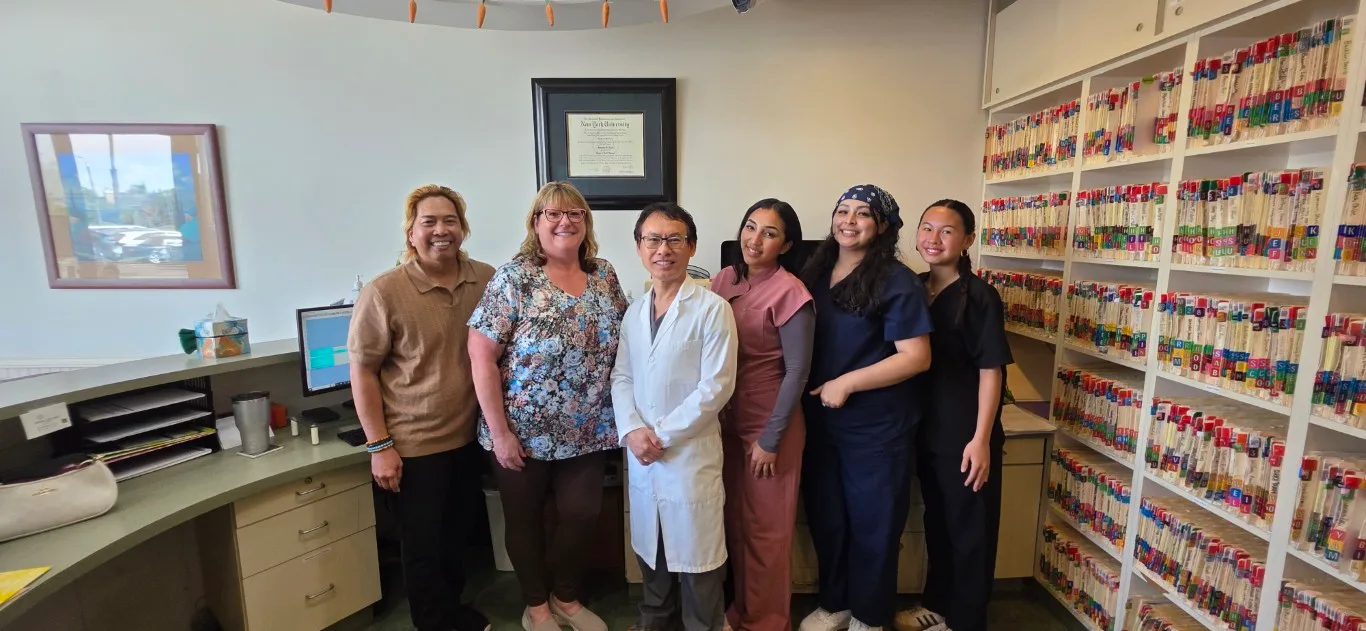
Dr. Kenneth Tran, DDS
AuthorDr. Tran earned his DDS from NYU College of Dentistry and has practiced dentistry in Huntington Beach for over 20 years. He provides comprehensive care from routine cleanings to complex implant cases at Peninsula Dentistry.