April is Oral Cancer Awareness Month, and in my 20+ years practicing dentistry in Huntington Beach, I’ve performed tens of thousands of oral cancer screenings. Most of my patients don’t even realize it’s happening. It takes about sixty seconds at the end of a routine checkup — I lift your tongue, feel the sides of your neck, check under your jaw, look at the back of your throat. Done. You barely notice, and yet it’s one of the most important things I do every single day.
Here’s why it matters. According to the Oral Cancer Foundation, approximately 58,000 Americans are diagnosed with oral or oropharyngeal cancer each year, and one person dies from it every hour. When oral cancer is caught early, the five-year survival rate is around 85%. When it’s caught late — because it rarely hurts in the early stages and most people don’t know what to look for — that number drops dramatically. The gap between those two outcomes is often a sixty-second screening.
This post is about what I’m actually checking when I do that screening, who’s at risk, and the signs you should bring to my attention immediately. I want you informed, not afraid.
What Oral Cancer Actually Is
When people hear “oral cancer,” they usually picture something dramatic and obvious. The reality is much quieter. More than 90% of oral cancers are squamous cell carcinomas, which start in the thin, flat cells that line the inside of your mouth and throat. They can develop on the tongue, the floor of the mouth, the soft palate, the tonsils, the back of the throat, the gums, and the lips.
Early oral cancer usually doesn’t hurt. It doesn’t bleed. It doesn’t disrupt your life. A small white patch on the side of your tongue, a tiny sore that you assume is from biting your cheek, a persistent lump you’ve been blaming on a pulled muscle — these are the presentations I see regularly. By the time oral cancer becomes painful or visibly advanced, it has often already spread to lymph nodes in the neck, which is when treatment becomes much harder and prognosis worsens.
That’s the central problem with oral cancer, and it’s why screening matters. You can’t feel what you can’t feel. Your dentist can.
Who’s at Risk — And It’s Probably Not Who You Think
The classic risk profile for oral cancer used to be a man over 55 who smoked and drank heavily. That patient is still at elevated risk, but the demographics have shifted dramatically in the last fifteen years. Today I see concerns in patients who don’t fit the old profile at all.
Tobacco use (all forms). Smoking, chewing tobacco, snuff, and e-cigarettes all increase risk significantly. Cigarette smokers are about six times more likely to develop oral cancer than non-smokers, and the risk multiplies when combined with heavy alcohol use.
Heavy alcohol consumption. More than three drinks a day independently elevates risk, and the combination of heavy drinking plus smoking is particularly dangerous — their effects multiply rather than simply adding together.
HPV (human papillomavirus). This is the biggest shift. HPV-16, in particular, is now considered the leading cause of oropharyngeal cancer — the cancers that develop in the back of the throat, base of the tongue, and tonsils. According to the CDC, about 70% of oropharyngeal cancers in the U.S. are linked to HPV, and the highest incidence is now in men ages 50 to 60 who don’t smoke and don’t drink heavily. This is a real change from two decades ago.
Sun exposure. This affects the lips specifically — and in Huntington Beach, this matters. Years of surfing, beach days, and outdoor work without lip protection increase the risk of lip cancer. I’ve caught early lip lesions on patients who’ve spent decades on the water. If you’re a surfer, a landscaper, a construction worker, or you’re just the type of person who forgets SPF on their lips, this applies to you.
Age. The majority of cases are diagnosed in people over 40, but I’ve seen early lesions in patients in their 20s and 30s, particularly with HPV-related cancers.
Prior cancer history. Patients who’ve had head-and-neck cancer before are at elevated risk for a second primary tumor.
The takeaway: if you’re thinking “I don’t smoke, so I don’t need to worry about this,” that’s outdated logic. Everyone should be screened regularly, regardless of lifestyle.
The 60-Second Screening You’ve Been Getting Without Knowing It
Let me walk you through exactly what I’m doing at every routine cleaning and exam. Once you know what to look for, you’ll notice me doing all of this — and you’ll understand why I take an extra moment here and there.
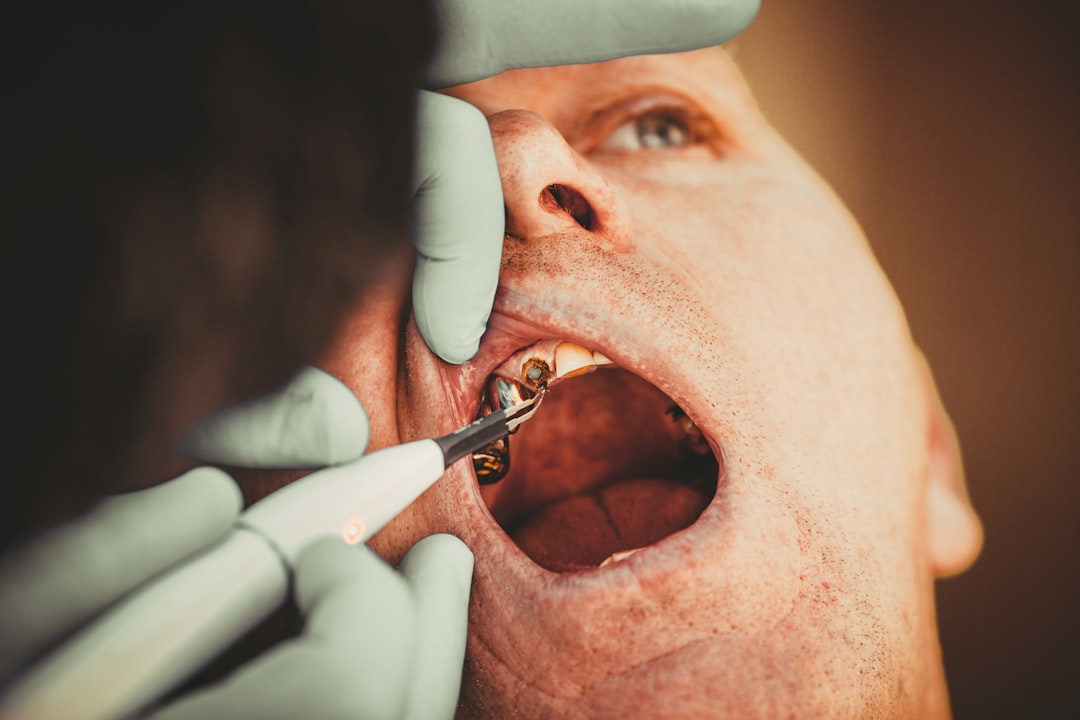
Visual inspection of the entire oral cavity. I look at the lips (inside and out), the gums, the cheeks, the hard and soft palate, the tonsils, the back of the throat, and every surface of the tongue — including the underside, which is one of the most common sites for early oral cancer. I’m scanning for color changes: anything that looks red, white, speckled, or unusually textured compared to the surrounding tissue.
Tongue examination. I’ll ask you to stick your tongue out, then gently grab the tip with gauze and pull it slightly to either side so I can see the lateral borders — the sides of the tongue where early cancers love to hide. I’ll also lift your tongue to examine the floor of the mouth and the underside. It takes ten seconds and it’s one of the highest-yield parts of the screening.
Palpation. I use my fingers to feel the tongue, the floor of the mouth, and the inside of the cheeks for any lumps, thickening, or unusual firmness. Healthy tissue is soft and pliable; cancer tissue often feels firm, fixed, or rope-like.
Neck and jaw. I’ll put my fingers along the sides of your neck and under your jaw, feeling the lymph node chains. Swollen, firm, or unusually hard lymph nodes can indicate that something’s going on that needs further investigation.
Functional checks. I’ll ask you to move your tongue in various directions and sometimes to say a few words. Limited tongue movement or changes in speech can point to issues I’d want to investigate further.
Documentation. Any abnormal findings go into your chart with a photo if possible, so at your next visit I can compare and see if something has changed.
That’s the whole thing. Sixty seconds, maybe ninety if I want to take a closer look at something. You don’t need any special equipment, dye, or light for a thorough screening — competent hands-on examination by a trained dentist is still the gold standard. Some offices market “advanced” screening technologies, and while they can be useful adjuncts, they don’t replace the fundamentals.
Warning Signs You Should Bring Up Immediately
Between your regular visits, here’s what I want you watching for. If any of these persist for more than two weeks, call me — don’t wait for your next scheduled cleaning.
- A sore in your mouth that doesn’t heal. Regular mouth ulcers (canker sores, bite wounds) heal within 7-14 days. Any sore that lingers beyond that deserves an evaluation.
- A persistent white or red patch on the gums, tongue, tonsils, or lining of the mouth. White patches (leukoplakia) and red patches (erythroplakia) are often precancerous or early cancer.
- A lump or thickening in the cheek, tongue, or anywhere in the mouth.
- A sore throat that won’t go away or a feeling that something is stuck in your throat.
- Difficulty chewing, swallowing, or moving your tongue or jaw.
- Numbness in the tongue, lips, or other part of the mouth.
- Chronic hoarseness or voice changes that last more than two weeks.
- Unexplained ear pain — especially ear pain on just one side that isn’t associated with an ear infection. The nerves that supply the throat also supply the ear, and referred pain is a classic early sign of pharyngeal cancer.
- Unexplained bleeding in the mouth.
- Loose teeth without a clear dental cause.
Most of these symptoms have innocent explanations. A canker sore, a seasonal sinus infection, a muscle strain. But the only way to know for sure is to get it checked. I’d much rather see ten patients with nothing to worry about than miss the one who has something serious.
What Happens If I Find Something Concerning
Let me be honest about this because I don’t want anyone reading this to panic. The vast majority of unusual findings during an oral cancer screening turn out to be benign — bite trauma, harmless fibromas, inflammation, geographic tongue, and so on. When I find something I want to watch, my approach is:
Step 1 — Document and reassess. For minor findings that might just be irritation, I’ll document the spot with measurements and photos and ask you to come back in two weeks. If it’s resolved, great — done. If it hasn’t changed or has worsened, we move to step 2.
Step 2 — Biopsy or referral. For anything that looks suspicious on the first visit, or that hasn’t resolved after two weeks, I refer you to an oral surgeon or ENT specialist for a biopsy. A biopsy is the only way to definitively identify what something is. It’s usually a quick in-office procedure under local anesthesia, and results come back within a few days.
Step 3 — If something is diagnosed. If a biopsy comes back positive for cancer or precancer, the specialist will walk you through treatment options. Oral cancers caught early are often highly treatable. I stay involved throughout your care because you’re still my patient.
Finding something during a screening isn’t a death sentence — it’s the best possible outcome of a screening. A caught lesion is a treatable lesion. A missed one is what we’re trying to prevent.
Why I Take This So Seriously
A few years ago, I had a patient — a longtime HB resident, non-smoker, healthy guy in his early 50s — come in for his regular cleaning. During the exam I noticed a small white patch on the side of his tongue that hadn’t been there six months earlier. He’d assumed it was from biting his tongue. It wasn’t causing any pain. He might have ignored it for another year or two without thinking twice.
I documented it, took photos, and sent him for a biopsy. It came back as early-stage squamous cell carcinoma. He had a small surgical resection by an oral surgeon, no chemotherapy or radiation needed, and he’s been cancer-free for over four years. He still comes in every six months, and every single visit, he thanks my team for catching it. That’s why I do this. That’s why I spend the extra minute.
Oral cancer screening isn’t a luxury service. It isn’t an upsell. It’s a baseline standard of care that every patient should receive at every cleaning. At Peninsula Dentistry, it’s built into the routine because I’ve personally seen what early detection does — and what missed detection does.
Frequently Asked Questions
How often should I get an oral cancer screening?
Every six months, as part of your routine dental cleaning and exam. For patients at elevated risk — heavy smokers, heavy drinkers, patients with a history of head-and-neck cancer, or patients with precancerous lesions being monitored — I may recommend screenings every three to four months instead.
Does the screening hurt?
No. It’s entirely non-invasive. I’m looking with my eyes and feeling with my fingers. There are no needles, no scraping, no cutting. The only time you’d experience anything uncomfortable is if I find a suspicious spot that needs a biopsy — and that biopsy would be done by a specialist under local anesthesia at a later visit.
I don’t smoke and I’m young. Do I still need oral cancer screening?
Yes. HPV-related oropharyngeal cancer is now more common than traditional tobacco-related oral cancer in younger, non-smoking patients. And sun-related lip cancer is a real concern for anyone who spends time outdoors in Huntington Beach. Screening takes sixty seconds and has no downside. Every patient at Peninsula Dentistry gets screened at every cleaning regardless of age or lifestyle.
Is oral cancer screening covered by insurance?
Yes. Oral cancer screening is part of the standard comprehensive exam that every dental insurance plan covers twice per year. It’s built into your preventive visit and doesn’t count as an extra charge. If your previous dentist wasn’t doing a thorough screening, you still paid for it through your cleaning fee — you just didn’t get it.
What should I do if I find something unusual in my mouth between visits?
Call the office. Describe what you’re seeing — size, location, how long it’s been there, whether it’s painful. If it’s been present for more than two weeks, come in for a focused exam. Don’t wait for your next scheduled cleaning. Most of the time it’ll turn out to be nothing, and that peace of mind is worth the visit. When it’s something, catching it early makes all the difference.
Does Peninsula Dentistry do advanced oral cancer screenings?
A thorough visual and tactile screening by an experienced dentist is the foundation of oral cancer detection and is what I perform at every cleaning. For patients with elevated risk or specific findings, I may recommend additional evaluation by an oral surgeon. I believe in using technology when it genuinely adds value and not selling upgrades that don’t materially improve outcomes.
Related Reading
- How Often Should You Really Visit the Dentist?
- Gum Disease: Warning Signs You Shouldn’t Ignore
- How to Overcome Dental Anxiety: Tips From a Dentist Who Gets It
Due for a cleaning and screening? Contact Peninsula Dentistry in Huntington Beach at (714) 374-8800 or book an appointment online. Every cleaning includes a thorough oral cancer screening — no upsells, no surprises, just good care.

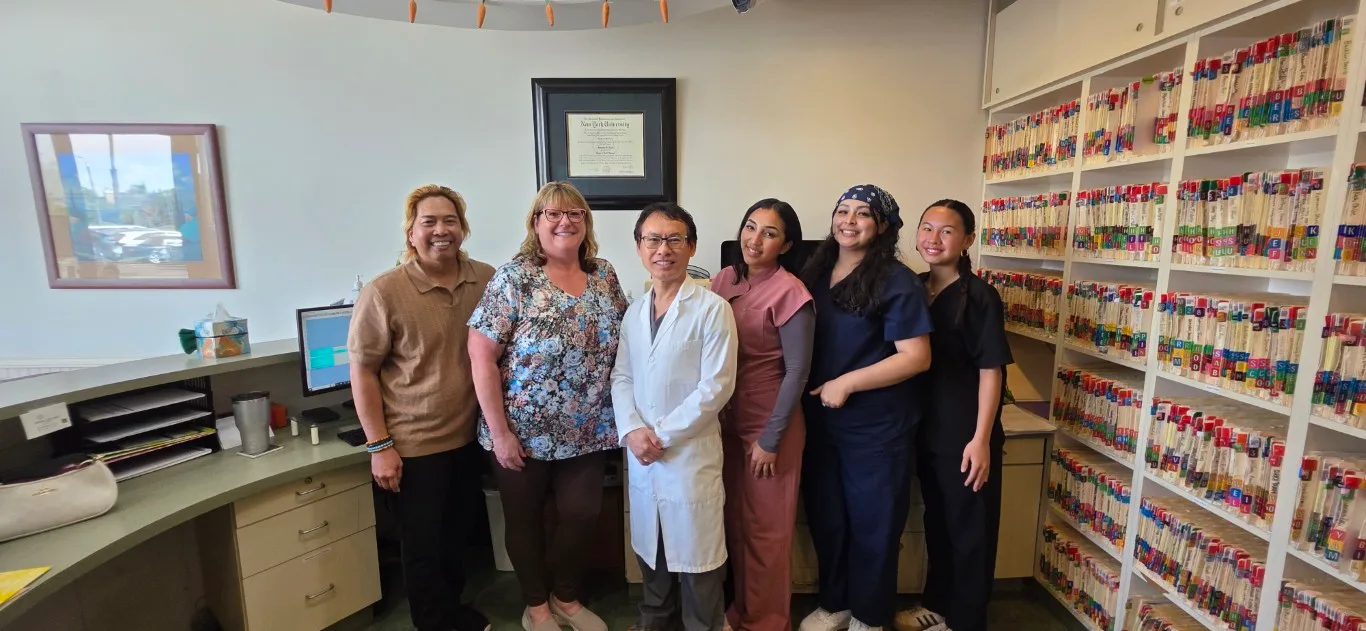
Dr. Kenneth Tran, DDS
AuthorDr. Tran earned his DDS from NYU College of Dentistry and has practiced dentistry in Huntington Beach for over 20 years. He provides comprehensive care from routine cleanings to complex implant cases at Peninsula Dentistry.