I’m going to be honest with you: if walking into a dental office makes your stomach drop, you’re not broken. You’re not being dramatic. And you’re definitely not alone. Dental anxiety affects an estimated 36% of the population, and about 12% of people experience such severe dental phobia that they avoid the dentist entirely — sometimes for years or decades.
After 20+ years of practicing in Huntington Beach, I’ve sat across from thousands of anxious patients. Some haven’t seen a dentist since childhood. Some had a bad experience that stuck with them. Some can’t pinpoint exactly why — they just know the whole thing makes them deeply uncomfortable. Every single one of those reasons is valid, and none of them means you can’t get the care you need.
This post is for you. Not a pep talk, not a guilt trip — just practical advice from someone who genuinely wants you to feel okay sitting in that chair.
Why Dental Anxiety Is Completely Normal
Let’s start here: being anxious about dental work isn’t irrational. You’re allowing someone to work inside your mouth — one of the most sensitive parts of your body — with sharp instruments, while you’re lying in a vulnerable position, unable to talk easily. That’s a lot of trust to hand over.
Historically, dental procedures were genuinely painful. Modern anesthesia, gentle techniques, and better technology have changed the game dramatically, but our brains don’t always catch up with progress. If you had a painful filling as a kid, your nervous system might still file “dentist” under “threat” — even if the experience would be completely different today.
There’s also the loss-of-control factor. You can’t see what’s happening, you can’t easily speak up, and you’re relying on someone else to be careful. For people who need to feel in control (which is most of us), that’s inherently stressful.
The point is this: dental anxiety has real, understandable roots. Acknowledging that is the first step toward managing it.
What Actually Causes Dental Fear
Understanding your specific triggers helps us address them. The most common ones I see at our Huntington Beach practice fall into a few categories:
A past bad experience. This is the number-one driver. Maybe a procedure hurt more than expected, or a previous dentist was dismissive of your pain. One bad visit can create a lasting association between “dentist” and “suffering.” It only takes once.
Fear of pain. Even if you’ve never had a bad experience, the anticipation of potential pain is enough. Your brain runs worst-case scenarios, and by the time you’re in the chair, your nervous system is already in fight-or-flight mode.
Fear of needles or drills. Some anxieties are tied to specific stimuli. The sound of the drill, the sight of a needle, the sensation of vibration — these can trigger intense discomfort that goes beyond simple nervousness.
Embarrassment. This one doesn’t get talked about enough. If you’ve been avoiding the dentist for years, you might feel ashamed about the state of your teeth. You’re worried about being judged. I want to be crystal clear: that doesn’t happen here. I’ve seen everything, and the only thing I care about is helping you get healthy.
Sensory sensitivity. Some people have a strong gag reflex, extreme tooth sensitivity, or difficulty keeping their mouth open. These physical factors amplify the discomfort of dental visits and make the whole experience harder.
Feeling out of control. When you’re reclined in a dental chair, you can’t see what’s happening, and you can’t easily talk. For a lot of people, that powerlessness is the core issue.

How I Approach Anxious Patients
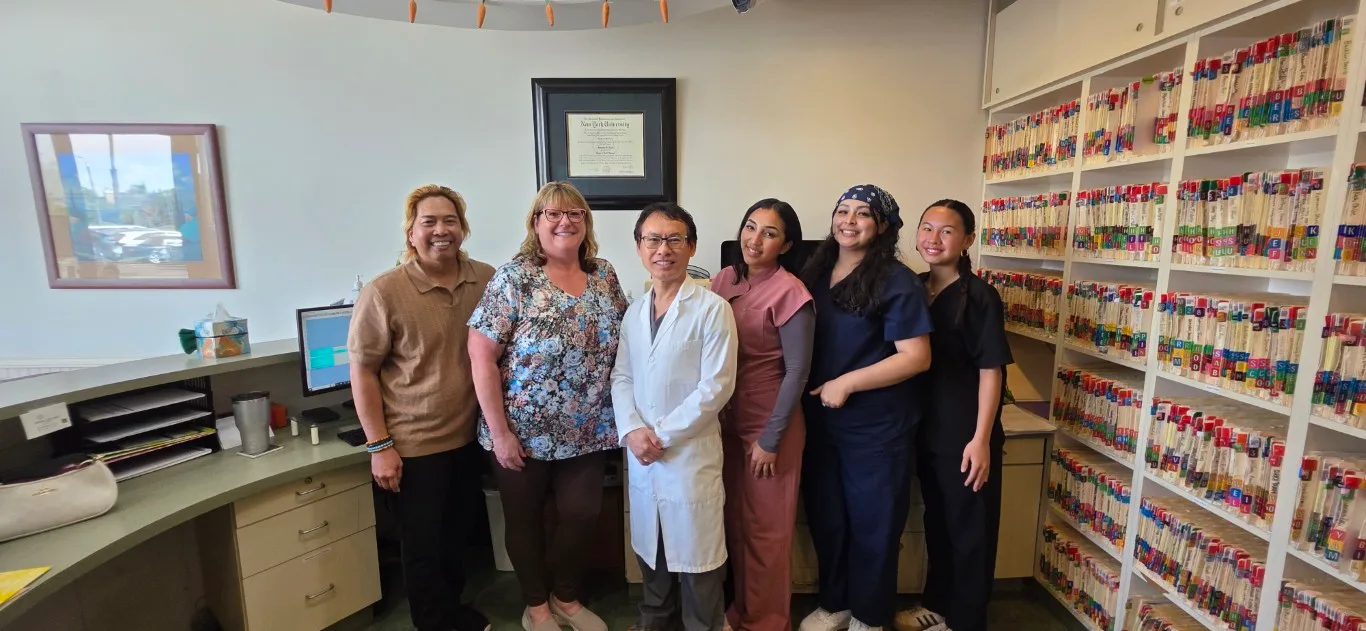
Over the years, I’ve developed a few principles that guide how my team and I treat nervous patients. These aren’t marketing points — they’re genuinely how we operate.
We Go at Your Pace
If you need to start with just a conversation and an exam — no cleaning, no X-rays — that’s fine. I’ve had patients come in for three “getting-to-know-you” visits before they were ready for actual treatment. That’s not a waste of time. That’s building trust, and trust is the foundation of everything we do.
We Explain Before We Do Anything
Surprises are the enemy of comfort. Before I pick up any instrument, I tell you what I’m about to do, why I’m doing it, and what you’ll feel. No sudden movements, no unexplained noises, no “just hold still for a second.” You have the right to know what’s happening in your own mouth.
The Stop Signal
Every patient gets a stop signal — usually raising your left hand. If you raise your hand, I stop immediately. Not in a minute, not after I “just finish this one thing” — immediately. Knowing you have that power changes everything for anxious patients. You’re not trapped. You’re in control.
Honest About Discomfort
I don’t tell you something won’t hurt if it might. I’ve seen too many patients whose anxiety got worse because a previous dentist said “you won’t feel a thing” and then they absolutely did feel it. I’d rather tell you, “You might feel some pressure here for about ten seconds” and have you think, “That wasn’t bad at all.” Underpromise, overdeliver.
No Judgment — Period
I don’t care if you haven’t been to a dentist in 15 years. I don’t care if you have cavities or gum disease. I care about where we go from here. My job isn’t to make you feel bad about the past — it’s to help you build a better future for your oral health.
Practical Strategies You Can Use
Beyond what we do in the office, here are real strategies that help anxious patients:
Schedule Morning Appointments
Waiting all day for a dental appointment gives your anxiety time to build. A morning slot means you walk in before your brain has had hours to catastrophize.
Bring Headphones
Music or a podcast can do wonders. It blocks out the ambient sounds of the office — the drill whirring in another room, the suction, the beeping — and gives your brain something else to focus on. We’re completely fine with patients wearing earbuds. I’ll tap your shoulder if I need your attention.
Practice Breathing Techniques
This sounds simple because it is. Slow, deep breaths — in through your nose for four counts, hold for four, out through your mouth for six. This activates your parasympathetic nervous system and physically calms the fight-or-flight response. It’s not a magic cure, but it’s a real, science-backed tool.
Bring a Support Person
You’re welcome to bring someone into the treatment room with you. A partner, a friend, a parent — whoever makes you feel safer. They can sit right next to you and hold your hand if that helps.
Communicate Your Fears
Tell us what you’re afraid of. Be specific if you can. “I hate needles” is useful information. “I had a root canal in 2004 that was terrible” helps me understand your history. The more I know, the better I can tailor your experience.
Sedation Options at Peninsula Dentistry
For patients whose anxiety goes beyond what communication and breathing exercises can manage, we offer sedation options that can make your visit genuinely comfortable.
Nitrous oxide (laughing gas). This is the mildest form of sedation. You breathe it in through a small mask over your nose, and within a few minutes, you feel relaxed and slightly floaty. You’re fully conscious and can respond to questions. The effects wear off within minutes of removing the mask — you can even drive yourself home.
Oral sedation. For moderate anxiety, we can prescribe a sedative pill to take before your appointment. This produces a deeper state of relaxation. You’ll be awake but very calm — many patients describe feeling drowsy and detached. You’ll need someone to drive you to and from the office.
IV sedation (for oral surgery). For more involved procedures like wisdom teeth extractions or implant placement, IV sedation provides a deeper level of sedation. Most patients don’t remember the procedure at all.
We discuss sedation options during your initial consultation so you know exactly what to expect. There’s no wrong answer — choosing sedation doesn’t mean you’re weak. It means you’re smart enough to use the tools available.
Building Trust Over Time
Here’s the thing about dental anxiety: it usually doesn’t disappear after one good visit. It fades gradually. The first visit might still be hard, but it’ll be better than you feared. The second visit is a little easier. By the fourth or fifth visit, you might actually feel — dare I say — okay about it.
I have patients who used to white-knuckle the armrests during a basic cleaning and now walk in, sit down, and ask me what new restaurants I’ve tried lately. That transformation didn’t happen overnight. It happened because we built trust incrementally, one honest, gentle, no-judgment visit at a time.
That’s the approach at our Huntington Beach office. We’re not trying to fix your anxiety in a single appointment. We’re trying to create an environment where it naturally diminishes because you consistently have positive experiences.
Tips for Your First Visit When You’re Anxious
If you’ve been avoiding the dentist and you’re finally ready to come in, here’s what I’d suggest:
-
Call ahead and tell our team you’re nervous. We’ll note it in your file, and everyone — from the front desk to the hygienist to me — will know to take extra care with you.
-
Start with just a consultation. No pressure to do anything on the first visit. We can talk, take a look, and plan from there.
-
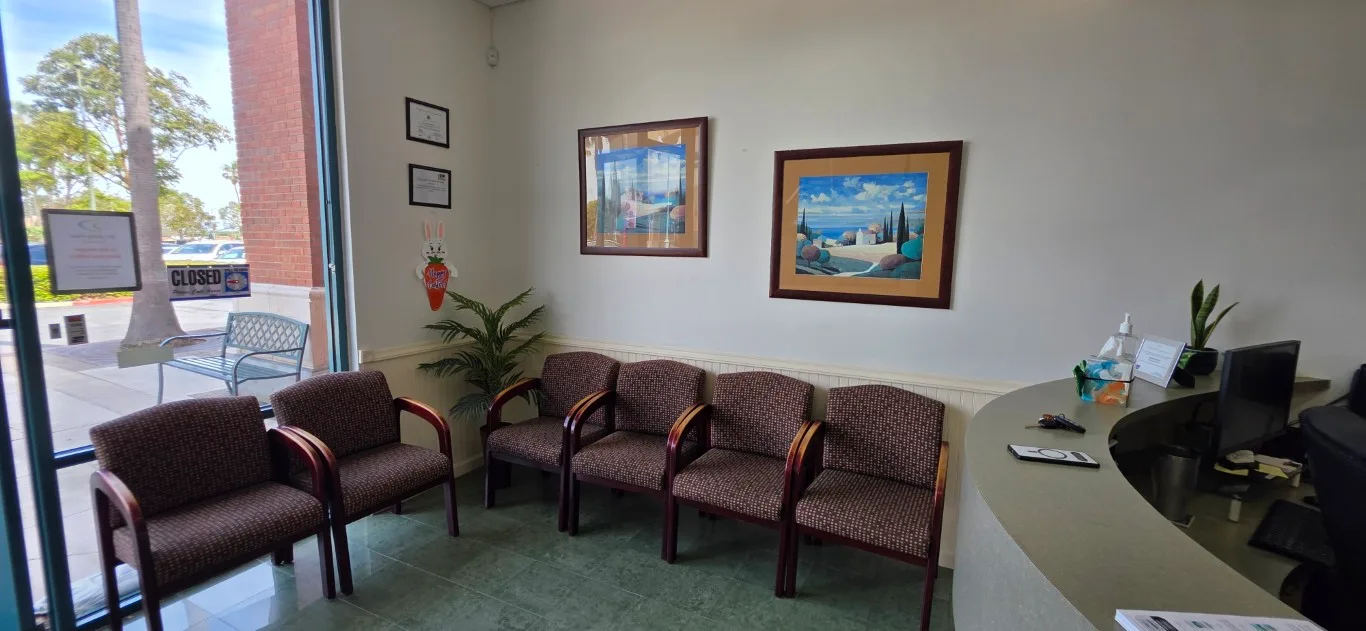
Arrive early. Rushing in stressed out makes everything worse. Give yourself 10-15 minutes to sit in the waiting room, breathe, and acclimate.
-
Ask questions. If you want to know why I’m taking an X-ray or what a specific instrument does, ask. There are no stupid questions, and understanding the process reduces fear.
-
Know that you can stop anytime. This isn’t a commitment you can’t back out of. If you need a break mid-procedure, we take a break. If you need to reschedule the second half, we reschedule.
You Deserve Dental Care — Even If It Scares You
I became a dentist because I genuinely enjoy helping people. My three daughters have grown up watching me come home from work happy because I helped someone who was in pain, or gave someone their smile back, or helped a terrified patient realize that the dentist isn’t so scary after all. Those moments are why I do this.
Your anxiety is real, but it shouldn’t cost you your oral health. Untreated cavities lead to infections. Untreated gum disease leads to tooth loss. Avoided dental visits mean missed opportunities to catch problems — including oral cancer — early. The stakes are real, and you deserve care that respects both your body and your emotions.
If you’re reading this and you’ve been putting off the dentist, this is me extending a genuine invitation: come see us. We’ll go at your pace, we’ll explain everything, and we’ll make it as comfortable as humanly possible.
Frequently Asked Questions
Is dental anxiety a real condition?
Absolutely. Dental anxiety and dental phobia are well-documented psychological conditions recognized by the medical community. They exist on a spectrum from mild nervousness to severe phobia that prevents people from seeking care entirely. If you experience it, you’re dealing with something real — not a character flaw.
Will the dentist judge me if my teeth are in bad shape?
Not at this office. I’ve treated patients who haven’t seen a dentist in over a decade. My reaction is always the same: let’s figure out where you are and make a plan to move forward. Judgment isn’t productive, and it’s not how we operate. You took the hard step of coming in — that’s what matters.
Can I be sedated for a routine cleaning?
Yes. While most patients don’t need sedation for a routine cleaning, it’s available if your anxiety makes it necessary. Nitrous oxide is the most common option for cleanings — it takes the edge off without knocking you out, and you recover almost instantly afterward.
How do I find a dentist who’s good with anxious patients?
Look for a practice that specifically acknowledges dental anxiety — not just in marketing, but in how they operate. Ask about their approach: do they offer a stop signal? Will they explain procedures before starting? Do they offer sedation options? At Peninsula Dentistry, these aren’t extras — they’re standard practice for every patient.
What if I have a panic attack in the chair?
It happens, and we’re prepared for it. If you feel a panic attack coming on, raise your hand and we stop everything. We’ll give you time to breathe, sit up if you want, and decide whether to continue or come back another day. No one will be frustrated or impatient with you. Your safety and comfort come first.
Related Reading
- Your Child’s First Dental Visit: What to Expect and How to Prepare
- How Often Should You Really Visit the Dentist?
Ready to take the first step? Contact Peninsula Dentistry in Huntington Beach at (714) 374-8800 to schedule a no-pressure consultation. We’ll go at your pace.

Dr. Kenneth Tran, DDS
AuthorDr. Tran earned his DDS from NYU College of Dentistry and has practiced dentistry in Huntington Beach for over 20 years. He provides comprehensive care from routine cleanings to complex implant cases at Peninsula Dentistry.