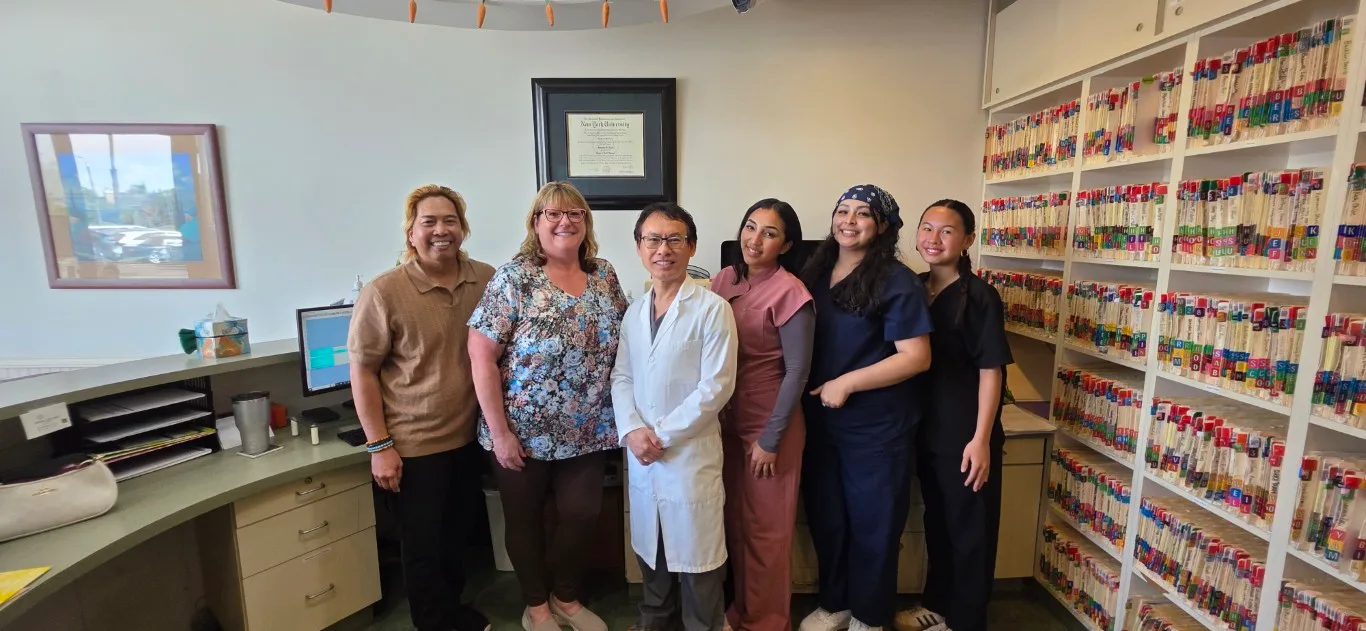
When you’re missing teeth — whether it’s a few or a full arch — the decision of how to replace them is a big one. It affects how you eat, how you speak, how you look, and honestly, how you feel about yourself. I’ve had this conversation with hundreds of patients over my 20+ years in Huntington Beach, and I always start the same way: there’s no single right answer for everyone.
But I do have opinions. And since you’re reading this, I’m going to give them to you straight, the same way I would if you were sitting across from me in the chair.
Understanding Your Options
Let’s start with the basics so we’re all speaking the same language.
Full Dentures (Complete Dentures)
Full dentures replace an entire arch of teeth — upper, lower, or both. They’re removable appliances that sit on top of your gums. Modern dentures look much more natural than they used to, and a well-made set can restore a nice smile. But they do sit on top of the gum tissue, held in place by suction and sometimes adhesive.
Partial Dentures
If you’re missing several teeth but still have some healthy ones remaining, partial dentures fill in the gaps. They clip onto your existing teeth with metal or tooth-colored clasps. Think of them as a removable bridge.

Dental Implants
Dental implants are titanium posts surgically placed into the jawbone. The bone fuses around them over a few months (osseointegration), creating a permanent anchor. A custom crown, bridge, or even a full denture can then be attached on top. Implants function like natural tooth roots — they’re the only tooth replacement option that preserves jawbone.
Implant-Supported Dentures
This is the middle ground that a lot of my patients don’t know about. Instead of a full set of individual implants, we place 4-6 implants per arch and snap a custom denture onto them. The denture clicks into place securely — no adhesive, no slipping — but can still be removed for cleaning. It’s a game-changer for people who want the stability of implants without the cost of replacing every single tooth.
The Bone Loss Problem Nobody Talks About
Here’s something I wish every patient understood before making their decision: when a tooth is removed, the jawbone in that area immediately starts shrinking. Without the stimulation of a tooth root (or an implant acting as one), the bone resorbs. It’s not a matter of if — it’s a matter of how much and how fast.
In the first year after tooth loss, you can lose up to 25% of the bone width in that area. Over time, this continues. It’s why people who’ve worn dentures for decades often have a “sunken” appearance — their jawbone has literally shrunk away beneath the denture.
Traditional dentures sit on top of the gums and do nothing to prevent this. In fact, the pressure of the denture on the gum tissue can accelerate bone loss in some cases. This is one of the biggest drawbacks of dentures that gets glossed over in quick comparisons.
Dental implants, on the other hand, integrate with the bone and provide the same mechanical stimulation as a natural tooth root. They preserve bone. Full stop. Over 10, 20, 30 years, this difference becomes dramatic.
Quality of Life: The Day-to-Day Reality
I could give you a clinical comparison all day, but what most people really want to know is: what’s it actually like living with dentures vs. implants?
Eating
With dentures: You’ll need to modify your diet, at least somewhat. Biting into an apple, corn on the cob, or a thick steak can be challenging. Sticky foods (caramel, taffy) can pull dentures loose. Most denture wearers learn to cut food into smaller pieces and chew on both sides simultaneously.
With implants: You eat normally. Period. Implants are anchored in bone just like natural teeth. I have patients with full-arch implant restorations who eat steak, nuts, raw vegetables — anything they want. One of my patients told me the first thing he did after getting his permanent implant crowns was order ribs at a restaurant in Surf City. That made my day.
Speaking
With dentures: There’s a learning curve. Dentures can shift slightly when you talk, causing a clicking sound or slight lisp. Most people adapt within a few weeks, but certain words and sounds can remain tricky, especially with lower dentures.
With implants: No adaptation needed. They feel and function like natural teeth.
Comfort
With dentures: Even well-fitting dentures can cause sore spots, especially as the bone underneath changes shape over time. Relining (adjusting the fit) every 1-2 years helps, but discomfort is a common complaint. Upper dentures cover the palate, which affects taste sensation and can trigger a gag reflex in some patients.
With implants: Once healed, there’s nothing to adjust. No sore spots, no palate coverage, no adhesive residue.
Maintenance
With dentures: Removed nightly, soaked in cleaning solution, brushed separately. Your gums need to rest overnight without the denture in place.
With implants: Brush and floss like natural teeth. Come in for your regular cleanings and checkups. That’s it.
The Cost Conversation
I’m not going to dance around this because it’s usually the deciding factor. Here are realistic numbers for the Orange County area in 2026:
Dentures
- Full denture (one arch): $1,500-$3,000
- Partial denture: $1,000-$2,500
- Economy/basic dentures: Some places advertise lower, but in my experience, you get what you pay for. A $500 denture looks and fits like a $500 denture.
Keep in mind that dentures aren’t a one-time cost. They need:
- Relining every 1-2 years ($300-$500 per reline)
- Replacement every 5-8 years ($1,500-$3,000 again)
- Adhesive, cleaners, and repair costs along the way
Over 20 years, a set of dentures can cost $8,000-$15,000 when you add it all up.
Dental Implants
- Single implant (post + crown): $3,000-$5,500
- Implant-supported bridge (3-4 teeth): $6,000-$12,000
- Full-arch implant restoration (All-on-4/All-on-6): $15,000-$30,000 per arch
Yes, the upfront cost is significantly higher. But implants, with proper care, can last 25+ years — many last a lifetime. The titanium post essentially never wears out. The crown on top may need replacement after 15-20 years, but the foundation stays.
Over 20 years, a single implant might cost you $3,500-$6,000 total. A denture in the same position could cost more.
Financing and Insurance
Most PPO dental insurance plans cover a portion of both dentures and implants, though implant coverage varies widely. We verify your benefits before any treatment so there are no surprises. For the out-of-pocket portion, we work with financing options that allow you to spread payments over time. Our insurance and payment page has more details, or just call the office — we’ll figure it out together.
Who Is a Good Candidate for Each?
Dentures might be the better choice if:
- Budget is the primary concern. If the upfront cost of implants isn’t feasible right now, a well-made denture restores function and appearance at a lower price point.
- You have significant bone loss. Severe bone resorption can make implant placement difficult without extensive (and expensive) bone grafting first.
- You have health conditions that affect healing. Uncontrolled diabetes, certain autoimmune conditions, heavy smoking, or medications like bisphosphonates can compromise implant surgery outcomes.
- You want a faster solution. Dentures can be fabricated in a few weeks. Implants require months of healing.
Implants are the better choice if:
- You want a permanent, low-maintenance solution. Implants are as close to “set it and forget it” as tooth replacement gets.
- Bone preservation matters to you. If you’re in your 50s or 60s and want to prevent the facial changes that come with long-term bone loss, implants are the only option that addresses this.
- You want to eat, speak, and live without restrictions. If quality of life is the priority, implants win hands down.
- You’re healthy enough for a minor surgical procedure. Most adults are — age alone isn’t a disqualifier. I’ve placed implants in patients in their 70s and 80s with great results.
The Age Question
People often ask me, “Am I too old for implants?” Here’s my honest answer: age is almost never the issue. I care about your bone density, your overall health, and whether your body can heal from a minor surgical procedure. A healthy 75-year-old is a better implant candidate than a 50-year-old with uncontrolled diabetes.
On the flip side, younger patients sometimes ask about dentures because they’re more affordable. I always have a candid conversation about bone loss in these cases. If you’re 45 and get dentures, you could be looking at 30+ years of progressive bone resorption. For younger patients, I almost always recommend finding a way to make implants work — even if it means starting with a couple of key implants and adding more later.
Implant-Supported Dentures: The Best of Both Worlds?
For a lot of my patients, the sweet spot is implant-supported dentures. Here’s why I bring them up:
You get the stability and bone preservation of implants without the cost of replacing every tooth individually. We place 4-6 implants per arch and fabricate a custom denture that snaps onto them. It doesn’t move, doesn’t need adhesive, and stimulates the bone to prevent resorption.
The cost falls between traditional dentures and full-arch individual implants — typically $8,000-$15,000 per arch. For many patients, this is the option that makes the most practical and financial sense.
The denture can still be removed for cleaning, and if it wears out after 10-15 years, we can replace the denture portion without touching the implants. The foundation stays permanent.
Dr. Tran’s Honest Take
You asked for my opinion, so here it is. If a patient’s health and finances allow it, I recommend implants — every time. The bone preservation alone makes them worth it. The quality of life improvement is profound. And the long-term cost, when you factor in denture replacements and relines, is often comparable.
But I’ve also fitted many patients with high-quality dentures that transformed their lives. A patient who’s been hiding their smile for years, who can’t afford $20,000 in implant work — a $2,500 denture changes their world. I’d never tell someone to wait indefinitely for the “ideal” option when a good option is available now.
What I won’t do is let you make this decision without the full picture. That’s what this post is for, and that’s what we do in every consultation at Peninsula Dentistry. We lay it all out — options, costs, tradeoffs — and let you decide what’s right for your life.
Frequently Asked Questions
How long do dentures last compared to implants?
Traditional dentures typically need replacement every 5-8 years due to wear and changes in jaw structure. Dental implants can last 25+ years — often a lifetime — with the crown possibly needing replacement after 15-20 years. The titanium implant post itself rarely fails.
Can I switch from dentures to implants later?
Yes, and many patients do. The main consideration is bone density — if you’ve worn dentures for years, you may have experienced bone loss that requires grafting before implants can be placed. The sooner you make the switch, the simpler the process tends to be.
Do implants hurt more than getting dentures?
The implant procedure is surgical, but most patients say it’s comparable to a tooth extraction. It’s done under local anesthesia, and post-operative discomfort is usually manageable with over-the-counter medication. Dentures require no surgery but can cause ongoing gum soreness.
Will my insurance cover dentures or implants?
Most PPO dental plans cover a portion of dentures. Implant coverage varies — some plans cover it partially, others don’t. Our team verifies your specific benefits before treatment so you know exactly what’s covered. Visit our insurance and payment page for more details.
What’s the best tooth replacement option for someone in their 60s?
It depends on your health, bone density, and goals — not your age. Many patients in their 60s are excellent implant candidates. If budget or health concerns make implants impractical, implant-supported dentures offer a strong middle ground. The best first step is a consultation where we can assess your specific situation.
Related Reading
- Dental Implants in Huntington Beach: What to Expect
- How to Maximize Your Dental Insurance Benefits Before They Expire
Missing teeth and not sure where to start? Contact Peninsula Dentistry in Huntington Beach at (714) 374-8800 or schedule a consultation online. Dr. Tran will walk you through every option and help you find the one that fits your life.

Dr. Kenneth Tran, DDS
AuthorDr. Tran earned his DDS from NYU College of Dentistry and has practiced dentistry in Huntington Beach for over 20 years. He provides comprehensive care from routine cleanings to complex implant cases at Peninsula Dentistry.