If you’re planning to get a dental implant — or you’ve already had one placed and want to know what’s normal — this guide is the conversation I try to have with every patient before they leave the office.
Healing from a dental implant has stages, and knowing what each one looks and feels like makes the whole process significantly less stressful. I’ve been placing implants in Huntington Beach for over 20 years at Peninsula Dentistry, and the most consistent thing I hear afterward is: “That was way less of a big deal than I expected.”
If you want the full picture first — candidacy, surgical process, cost, Dr. Tran’s philosophy — start with the main guide: Dental Implants in Huntington Beach: What to Expect. This post focuses specifically on healing and recovery.
How Long Does Dental Implant Healing Take?
The complete implant process — from surgery to final crown — takes 4 to 6 months for most straightforward cases. If a bone graft was needed before the implant could be placed, add another 3 to 4 months of graft healing to that timeline.
That sounds like a long time when I first say it. Then I explain that most of those months, nothing dramatic is happening on your end. The implant is sitting quietly in your jaw while bone cells slowly grow around and into the titanium surface. There’s no pain, no visible swelling, no dietary restrictions after the first couple of weeks. You have a temporary tooth in place so nobody can tell anything is different. You’re just living your life, and biology is doing its work.
Here’s exactly what each phase actually looks like.
Days 1–3: Acute Recovery
This is the window most patients are nervous about. It’s almost always the part they tell me afterward was easier than expected.
Immediately after surgery, the site is numb from local anesthesia — typically for 3 to 5 hours. When the numbness wears off, you’ll notice soreness at the implant site. This is normal. For the vast majority of patients, over-the-counter ibuprofen (400–600 mg every 6 hours with food) manages it completely. Some patients take nothing after day one.
What’s normal in these first three days:
- Mild to moderate soreness at the implant site
- Swelling in the gum and possibly the cheek — peaks around days 2–3, then gradually resolves
- Light bleeding or oozing from the site for the first 24 hours
- Bruising on the jaw or cheek in some patients (not universal)
- Mild fatigue if you had sedation
What I instruct patients to do:
- Rest for the first 48 hours — no exercise that significantly raises your heart rate, no swimming
- Keep your head elevated when lying down
- Apply ice wrapped in a cloth to the outside of the jaw for 20 minutes on, 20 minutes off, for the first 24 hours
- Eat soft foods only: yogurt, smoothies, mashed potatoes, scrambled eggs, soft pasta
- Starting day 2, rinse gently with warm salt water (half a teaspoon of salt in 8 oz of warm water) — do not swish forcefully
- Avoid alcohol, hot beverages, and straws for the first 48 hours
- Do not smoke — smoking is one of the leading risk factors for implant failure, and the risk is highest in the acute healing window
Call us if you notice:
- Significant bleeding that doesn’t slow with 20 minutes of gentle biting pressure on gauze
- Pain that’s getting worse after day 3 rather than improving
- Fever above 101°F
- Pus or unusual discharge from the site
- The implant or cover screw feeling loose
I send every patient home with my direct contact information. If something seems off, call — don’t wait and hope it improves.
Week 1: The Site Begins to Close
By day 4 or 5, most patients feel essentially normal. The soreness has largely passed, swelling is down, and everyday life resumes. Most patients with desk jobs return to work after 1–2 days. Physical jobs may take a few extra days.
Inside the surgical site, the gum tissue is closing and organizing. The earliest cellular stages of osseointegration — the process by which bone grows into and around the implant surface — have begun, though you won’t feel any of this.
Eating during week 1: Continue soft foods on the implant side. This isn’t because the titanium is fragile — it isn’t — but because the healing gum tissue needs to close without repeated mechanical disruption. Hard, crunchy, or chewy foods can pull at the sutures or irritate the tissue before it’s ready.
Oral hygiene: Brush all other teeth normally. Avoid directly brushing the surgical site for the first week. A gentle salt water rinse after meals is fine.
Weeks 2–4: Soft Tissue Healing Completes
The gum tissue over the implant site typically heals fully within 2 to 4 weeks. By week 3, most patients have genuinely forgotten about the implant in their day-to-day experience.
If I placed sutures at surgery, I’ll typically remove them at a 1–2 week follow-up appointment. This is a quick visit — I check the tissue, confirm everything is healing on track, and answer any questions. If sutures are the dissolving type, you may not need a separate visit for this.
Internally, osseointegration is well underway. Bone cells have been colonizing the microscopic textured surface of the titanium implant since the first days — a process that happens at the cellular level and produces no sensation whatsoever.
Common questions at this stage:
“Can I eat normally now?” — Mostly yes. I’d still avoid extremely hard foods (ice, hard candies, crusty bread) on the implant side until the final crown is seated and the bite is confirmed.
“Can I exercise?” — Yes. By week 2, normal exercise is fine for most patients.
“It doesn’t feel like anything is happening. Is that normal?” — Yes. Absence of sensation at the implant site during osseointegration is completely normal and expected.
Months 2–3: Deep Osseointegration
This phase is quiet by design. You’re living normally, and inside your jawbone, the titanium is becoming part of the bone structure itself. This isn’t just bone growing around the implant — it’s growing into the microscopic surface texture of the titanium, creating a mechanical lock that in many cases is stronger than a natural tooth root.
There’s nothing to actively manage during this phase. No activity restrictions. No special diet. Your only job is to maintain good oral hygiene — brush twice daily, floss around the implant site gently, use an antimicrobial rinse if I’ve recommended one.
I schedule a check-in around the 8–10 week mark to evaluate integration progress. For patients who smoke, have diabetes, or had bone grafting done before implant placement, I may want to wait longer before declaring integration complete. That patience is worth it — rushing this step is how late failures happen.
What not to worry about: Occasional mild pressure or awareness of the implant site during this phase is reported by some patients. What you shouldn’t feel is sharp pain, movement, or increasing discomfort. If any of those occur, contact us.
Months 3–6: Integration Confirmed, Crown Preparation Begins
At some point in this window — depending on your bone quality, healing rate, and whether a graft was involved — I’ll evaluate the implant for stability. I test this directly during an appointment. A successfully integrated implant is completely solid. There’s no detectable movement at all.
Once I’m satisfied, we move to the crown fabrication phase:
Digital impressions: I use an intraoral scanner to capture the precise shape of the implant position, your bite, and the surrounding teeth. No uncomfortable impression trays — the scan takes a few minutes.
Lab fabrication: Your digital impressions go to our dental lab, which fabricates a zirconia crown matched to your tooth shade, translucency, and anatomy. This typically takes about 2 weeks.
Crown delivery appointment (45 minutes): You come in, I try the crown in to verify fit and occlusion, make any minor adjustments, and bond it permanently. When you leave, you have a tooth — one that functions, looks, and feels like the real thing.
Factors That Affect Your Healing Timeline
Every patient heals at their own rate. Here’s what I watch most closely:
Smoking is the single most impactful modifiable factor. It significantly impairs bone healing by reducing blood supply to the surgical site and compromising the immune response. The research is clear: implant failure rates are measurably higher in smokers. If you smoke and want an implant, stopping 2–3 months before surgery and remaining stopped through the full osseointegration period gives you the best chance of success.
Diabetes (uncontrolled) impairs wound healing and can extend the integration timeline. Well-managed diabetes — where blood sugar is consistently controlled — generally doesn’t prevent implant success. I coordinate with patients’ physicians when relevant.
Bone graft healing adds 3–4 months before the implant can even be placed. The graft material has to be replaced by your own living bone before there’s adequate structure for the implant to anchor into.
Gum health matters more than many patients realize. Active gum disease creates a bacterial environment that directly threatens implant survival — peri-implantitis (infection around an implant) is one of the leading causes of late implant failure. If you have signs of gum disease, we treat it first with periodontal deep cleaning and confirm it’s stable before proceeding with an implant.
Age is less relevant than most patients assume. Healthy older adults typically integrate implants well. I’ve successfully placed implants in patients in their 80s. What matters is your bone density, overall health, and ability to heal — not the number on your driver’s license.
Monitoring Throughout the Process
At Peninsula Dentistry, I keep the entire implant journey in-house — from the initial 3D scan through surgical placement to the final crown and beyond. That means I see your case at every appointment, I know exactly how you’ve healed at each stage, and there’s no referral chain to communicate through if something needs adjusting.
The check-in visits during osseointegration aren’t just routine check-the-box appointments. They’re when I catch early signs of peri-implant issues before they become serious, verify that integration is progressing correctly, and adjust the timeline if your biology needs more time. A successful implant outcome is built on those details.
We’re in the Peninsula Marketplace at Goldenwest and Garfield in Huntington Beach, serving patients from across HB, Fountain Valley, Westminster, Seal Beach, and Costa Mesa. If you’re ready to start the process or have questions about what your specific recovery might look like, visit our dental implants service page or call (714) 374-8800.
Frequently Asked Questions
How long is the recovery after dental implant surgery?
Most patients feel back to normal within 3–5 days. The first 48 hours involve mild soreness and some swelling, managed with over-the-counter ibuprofen. By day 4–5, the majority of patients are back to work, light exercise, and most normal activities. The full osseointegration process takes 3–6 months, but that time is largely asymptomatic.
When can I eat normally after a dental implant?
For the first 1–2 weeks, soft foods on the implant side. By week 2–3, most patients can eat fairly normally. Avoid very hard or crunchy foods on the implant side until the final crown is placed and the bite is verified.
What does a failing dental implant feel like?
Signs to watch for: pain that increases rather than decreases after the first few days, any detectable movement of the implant, swelling that gets worse after day 3, or pus from the site. Contact us immediately if any of these occur. Early identification gives us the best options for addressing it.
Can I exercise after dental implant surgery?
Take the first 48 hours easy — nothing that significantly raises your heart rate. After 48 hours, light activity is generally fine. For strenuous exercise (running, heavy lifting, contact sports), I advise waiting 5–7 days to avoid disrupting the initial surgical site healing.
Does osseointegration hurt?
No. The bone-to-implant fusion process happens at a cellular level and produces no pain or sensation. Any discomfort patients experience comes from the initial surgery. By days 5–7 post-surgery — when osseointegration is well underway — the vast majority of patients feel completely normal.
How will I know if my implant has integrated successfully?
At a follow-up appointment, I test implant stability directly. A well-integrated implant is completely immobile — no movement at all under any load. There are also clinical measurement tools that quantify stability objectively. If I’m satisfied with integration, we move to crown preparation. If I want more time, we wait. There’s no benefit to rushing this step.
Have questions about what your dental implant recovery would look like specifically? Call Peninsula Dentistry at (714) 374-8800 or book a consultation online. The first visit includes a 3D scan and a realistic, honest conversation about your timeline.

Dr. Kenneth Tran, DDS
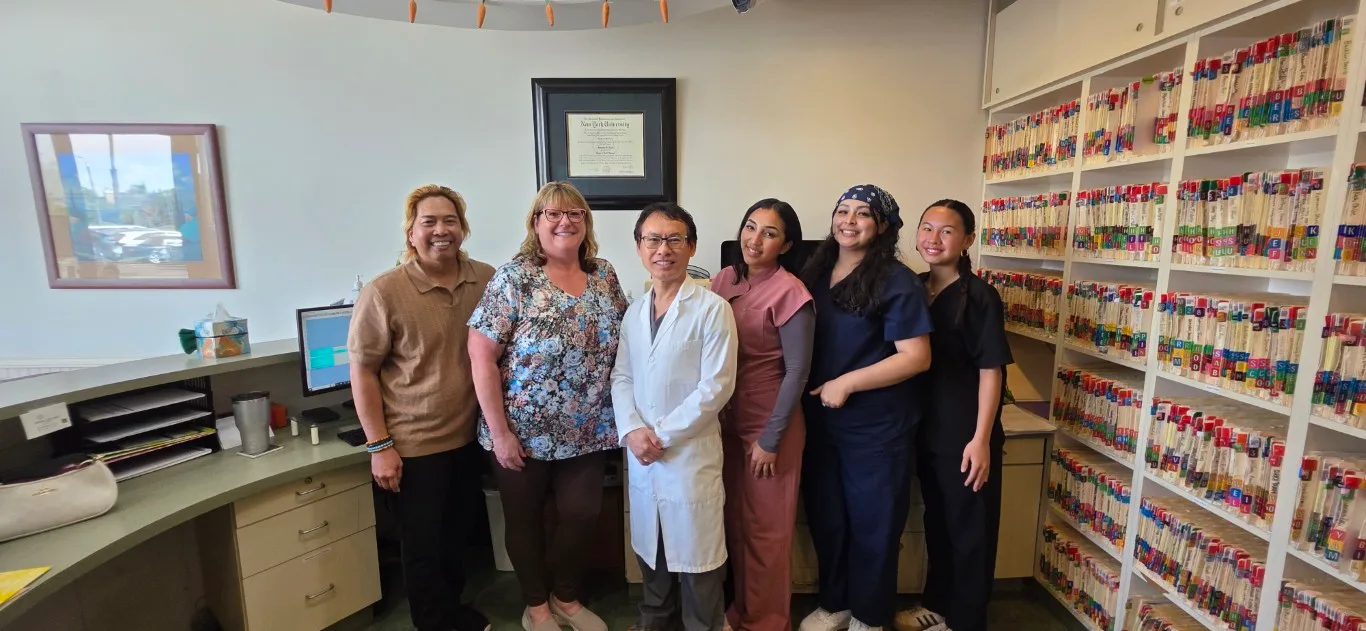
AuthorDr. Tran earned his DDS from NYU College of Dentistry and has practiced dentistry in Huntington Beach for over 20 years. He provides comprehensive care from routine cleanings to complex implant cases at Peninsula Dentistry.